Showing posts with label Sequel. Show all posts

Saturday, 2 June 2012

The Magician King by Lev Grossman


4
Following the events of the magicians, Quentin Coldwater is now one of the Kings of Fillory. It’s something he never dared to dream he’d have…but he’s still not happy. He’s restless. In trying to find occupation in adventure, Quentin stumbles upon something much more cosmically important leading to revelations and undesirable outcomes.

Though this is a sequel to The Magicians, this book doesn’t really feel that way to me. There are some references to Alice and Brakebills (the magic school) days, but they are almost pointless in the grand scheme of things. If you haven’t read the Magicians, it won’t be a problem in terms of understanding the story. I mean, if the names had been changed this could have easily been a separate stand-alone novel. For me, this wasn’t the best choice since what I like about sequels is those nods to the first book or when something in book one directly affects book two. For me these weren’t really there, and though I can appreciate the book it doesn’t feel like too much of a sequel to me personally.

The magic aspect was also elusive. The world was fantastical and there were other times when the magic of landscape was obvious, but other times it felt like the book had forgotten it was a fantasy book and things like magic were forgotten. Book one was a bit like this, but not to the extreme of the Magician King. There is only really one bit that this seems to go away, when Quentin is blasting magic left, right and centre.

But this highlights the crafting that has gone into the book. One thing Quentin says is that he doesn’t feel like a king, let alone a magician, most of the time. By the lack of magic and these things, we really feel this too. And it annoyed me, even enraged me, which only meant I could understand Quentin better.

This was the same for the general idea of Fillory and “real-life magic”. Quentin reminds us every few chapters that magic in books is often good and there is always a happy ending. Even the sadder endings are not so harsh on the characters. This book is not like that though. Even though book one improved at it’s very, very end, the whole final sequence was heart-wrenching and one of the most depressing endings I’ve ever read. In the Magician King, I’m reminded of this again. I don’t want to give anything away, but Quentin’s fate is almost unforgiveable. That one line that Elaine gives just made my heart sink, since I knew it wouldn’t end well after that.

There are also other dark elements involved, especially in Julia’s story. She was never accepted to magic school so she pursued magic however she could and sacrificed almost everything dear to her to get it. And how did that end up? For a long time it was horrifying for her. There’s this one scene which I shan’t repeat and which I don’t even like to think about which disgusted and depressed me so much. But at the same time I couldn’t stop reading. It’s was gripping and, though it pains me to say, realistic.

On a personal level, I struggle to read Grossman’s book. I get headaches from trying to process so much and some of the events genuinely affect me and my view of life for a short. I’ll be depressed, or feel lost, if only for a few hours. That could just be me (!!!) but I credit some of it to these books and these stories that seem to affect me so much. Sometimes I was just reading in a daze.

This book is something else, in a good and bad way. It’s bad in that I sometimes just want to walk away from this book and turn my back on some detestable truths, but then it is just so good at the same time that I can’t even begin to explain. This whole review is my trying to just give you a glimpse of how I feel about these books because in all honesty it’s so mixed up and indecipherable even for me. So read these if you want something magnificently compelling, but don’t say I didn’t warn you.

Thursday, 31 May 2012

Insurgent by Veronica Roth


5
Tris is back after the trauma she faced in Divergent. Since her youth in Abnegation, her life has turned upside down and the world seems to be following the same track. Yet it isn’t over, and as Tris comes to terms with her own demons, she has to deal with the next stage in the plot, leading to the unexpected.

I’m having the same problem many reviewers have with book. I want to sit here and talk your ear off about almost everything that happened in the novel, but in doing so I’d ruin the entire thing for you and anyone else. And then the double-sided blade scenario comes into play because I don’t want to spoil Divergent for you either: it is just as gripping and awesome.

So the best I can do is a bit of relativity of Insurgent in comparison to Divergent.

Anticipation
There was huge anticipation for this book and sometimes all that hype can ruin a book. It was somewhat similar with Divergent. Last time, for Divergent, I really got caught up in all that and frankly it lived up to that gargantuan expectation. The thing was, I tried to not get mixed up with the stuff prior to Insurgent for two reasons. One was purely personal, and if you follow me on twitter you probably have a general idea of that. The other was that I’ve been disappointed about hype a few times since I started blogging and the method I’m slowly developing is to not get involved in it and so I can’t be disappointed. The only reason I say all this is that I genuinely think this book deserved what hype I was exposed to and I genuinely think it was a great book.

Action
I think this book was about as action-packed as Divergent- they are dauntless after all! In some ways this was something I was expecting, since I rarely find myself so involved in fighting sequences in books. But these tended to draw me in, though they lacked some of the lustre of Divergent- but I think that was Tris’ influence. She loves her faction, but she’s still recovering psychologically and the almost manic loss-of-self in the action is less pronounced.

Characters
Four/Tobias was really great. In Divergent, my memory was that he went from International Man of Mystery to…well, Tobias. Without getting into it too much, it’s almost as though Four and Tobias are actually different people, which then links back to the Divergent things. Holy… I think pontificating actually rendered something vaguely sensible.
Tris got on my wick a little bit though. I don’t begrudge her being depressed, nor do I dislike the occasionally spontaneity of her, but I find part of me just wants to grab her and shake her. As Tobias puts it, she’s so frustrating. Not wrong, not hateable, she just makes me grind my teeth sometimes. I think the problem is that I can see, understand and even emphasise a bit with her, but I think she seems narrow-minded sometimes or inconsiderate of other things. It’s more of a niggle but meh.

Plot
I thought the plot was like a train journey before a huge crash. Strangely, this is a good thing. It started off fairly slowly, which made sense, and then when it got into the actually meat of the story it stayed fairly interesting. I think Divergent was more involving as a story for the middle section and I would stand by the belief that though the plot was good, it wasn’t perfect. It seemed sometimes too straight-forward or bit repetitive, but like an action movie. You sort of know what will happen, but you can still enjoy it. For me, the whole ending sequence was just brilliant. This is why I use the train crash analogy: you’d notice when you start to move, and you’d notice when you were on the main section of the journey, but you simply can’t ignore it when you crash. I don’t want to give away a thing about the ending though- I just want to say I thought it was utterly brilliant.

Conclusion (!)
A great book, and definitely a commendable sequel. It might not have been special in a particular way, but that might only be because it followed Divergent which was so fantastic. It’s a solid 5 for what it is and I’m oh-so-grateful to Karen for getting this for me! If anyone liked Divergent, they should definitely look into this.

Monday, 9 April 2012

A Clash of Kings by George R. R. Martin

Possible spoilers for book one but not this book, but they will be highlighted such that one can avoid them!


4
This book two in Martin's A Song of Ice and Fire series and is an extremely long read (though I hear A Dance With Dragons is longer still). It is continuation of every and all events from book one and is just as hard-hitting and, in some ways, wonderfully deplorable. In my opinion, it is the better of the two since I was much more interested in events than in book one.

The plot in this series, for anyone who hasn't read the books, is a sprawling mess of utter chaos. The best analogy is to imagine a plate of spaghetti, and each string of spaghetti is a plot line and reading it is like trying to find the other end of the spaghetti WITHOUT yanking it out. It is utter madness sometimes. You seem to have your main plot and about 4 other sub-plots, per viewpoint. And then there are around 6 view points. So you have a grand total of around 30 plots which you have to try, in vain to keep straight. Early on in the book, it's even worse. I commend Martin for not just tying off the old plots and moving on, but the start of the book holds onto about half of the plots for about a third of the book, but still insists on bringing in more. What I'm saying is that these are highly confusing books a lot of the time, and sometimes you'd be reading something and only realise about 3 pages in which plot it pertains to.

This same issue is with the characters, though it is less pronounced. The back of the book lists every major and minor character of the major factions on the book, and I seriously believe that every one of them is important in some way. Finishing the book, I astounded myself with how many characters I managed to keep straight in my head. Admittedly, I just had to keep reading blind sometimes and hope this character wasn't too important.

It's a credit to Martin, I have to say, that despite being occasionally muddled I managed to know what was going on. How I think he does it is by defining everything with certain events of names. Practically all the characters have a defining a feature- some are "the Knight of X", they may be named "The [noun]" or they were involved in some conquest- and they will be the only ones associated with this. It's fantastically done when I think about it.

Anyway, down to specifics.

Once again, one of the things is disliked was the wanton brutality of the books, and the banalisation of rape and prostitution. I read some response Martin gave on these fronts (I'm not the only one who is disturbed by it) and he defends it by saying that it is historical and medieval England was like this. He doesn't like it any more than we do, but he has to right a realistic, truthful story. If that means it must be gritty and disturbing, so be it. I can accept that since he's right to be honest in his story, but I'm retaining the right to dislike it. It is too often brought up, in my opinion, and hate that the men are often so flippant about it. It doesn't usually detract from the story, but I think that if anyone has particular sensibilities or particular revulsion to these things, stop while you're ahead; since I expect it to get worse as the book continues and fighting grows. I wonder if I would have ever opted to read these books had I known they were so....so like this.

**** SPOILERS FOR BOOK ONE IN NEXT PARAGRAPHS UNTIL I SAY OTHERWISE!!! ****

I actually got more invested in various stories this time around. Last time, stories such as Jon Snow's, Sansa's or Arya's were just not at all interesting. However, at the end of book one, Arya has fled the castle, Sansa dislikes Joffrey (and, forgive me, has finally gotten some sense) while Jon has learnt that the Night's Watch are to go beyond the wall. In book one, I could read Jon's chapters easily enough for the same reasons I could read Catelyn's and Bran's: because despite not being terribly interesting, they were written and I liked the voice's. Also, they both had points were they were actually interesting. With Jon, I felt his story had so much potential to be interesting, but it just wasn't. I understand they had to train, set up loyalties and what not but there was wasted opportunity, in my opinion. There was always the feeling of a growing threat and it infuriated me that it was never realised story-wise.

Tyrion and Daenerys are both just as good though, if not better. Tyrion is whimsical and despite being a Lannister, I'm actually going to accuse him of having a great deal of sense and even a few morals. In some ways, he often strikes me as the most human of the characters and even though he has his weaknesses and short-comings (no pun intended), he is probably the only Lannister I would want to be King. I think he has the good sense to look past his own life and desires and do what is right for the kingdom as a whole.

Daenerys disappointed me a little since very little happened in her story besides a lot of wandering around, hopeless, and sitting about dreaming about her future. I think she had fewer chapters than last time as well so we didn't see her as much. But the dragons....man, do I love them! I squirm with happiness whenever they do anything and, at one point, it says how she was reclining in cushions with her dragons around her. Bliss, utter bliss.

There are two new views as well: Ser Davos, a Knight of Stannis, and Theon Greyjoy. Davos had a nice voice, and I did like him, but I was more interested in him because Melisandre and the magic (?) she suggested she had.  Theon is more interesting, but only because I hate him from the bottom of my heart. I feel sorry for him since he feels abandoned by his own family, but does he need to be such a debased and detestable individual? He has no value for women or anyone less than himself. In so many ways, he is just like a Lannister in his overwhelming idea of self worth and importance. And the things he does- the way he is- just disgusts me. The bit with Bran and Rickon...I just had to stop reading for a short while. I felt my heart stop; I stopped breathing in shock. I was just blown away at how much I could hate a character.

**** SPOILERS OVER ****


Overall, I was impressed with this book. If you read book one and were a bit dubious, I think this book will set your mind at ease that this is likely to be an enjoyable series and that you should definitely keep reading. I only warn you to expect to be reading this for a while; my copy was around 900 pages.

Wednesday, 1 February 2012

A Million Suns by Beth Revis

4
The sequel to Across the Universe, this is a dystopian novel set in space. Once again, it follows Amy and Elder in their separate lives aboard Godspeed, and delves into their growing infatuation for one another as it continues to grow in a realistic, albeit quick manner.

As a general overview of what I thought, I would say this book is much better than the first (though this review is harder to write without spoilers or abandoning good English). I didn't know what to expect from book two because, in many ways, the ending of book one was very final and suggested a very linear series with the same kind of goal each time. But Beth completely blew me away by turning the book on its head- turning it into a mystery novel, without losing its strong YA elements. I really mean that, since I could never predicted that this or that would happen. About half way through, I felt some of the foreshadowing was a bit too obvious and that the protagonists were being a bit unobservant, but it quickly passed and the book became enjoyable and wonderful once more.

The romance is better here than book one, but I was startled by the fact that Amy seemed to completely forget Jason though, in book one, I remember him being mentioned often. Amy and Elder do seem to have chemistry, and you can tell that it was  one of those "I want to love him, but can I or should I?" romances which can get tiresome as our protagonist goes home and spends a few pages agonising over little details and their numerous loyalties. Not so here, I felt. Instead it's more of a thought that passes through Amy's head (Amy's the reluctant one and Elder the hopeful, but never pushy other) when they flirt with something more romantic. One thing I that I really liked was how Beth portrayed how they were flitting about the subject of their relationship, without having to mention it every time. It was lingering there and I loved that it didn't need to be perpetually repeated.

The plot of the story isn't actually all that different to book one: an unknown someone is causing trouble and they have to find out who. That sounds worse than it is, since the ship is full of discord and their are other issues to contend with i.e. Amy's peculiar appearance (to the ship's residents) and Elder's duties as a leader. I can't say too much about that without giving away spoilers for book one or two, but I assure they are interesting and perfectly apt for the tone and setting of the book. The conclusion of the mystery side of the story was really well done because I kept doubting myself and I was of the opinion that it could have feasibly been any of three people. The other side of the story concerned Godspeed's mission- that is, it's mission to find a new planet to inhabit. This starts with a bang in the book, so to speak. The point reached in book one is rendered unimportant in comparison to what we learn in the first few chapters of the book, but once again it is faultlessly blended with the story and doesn't seem like a straight-forward plot device.

Things I didn't like about the book are almost so minor that they aren't worth mentioning, but they are the reason A Million Suns gets a 4 and not a 5. There are frequently scenes were Amy goes to see her frozen parents, and though I could accept her reasons and couldn't defend a complaint, they annoyed me. I kind of felt that she was going there so that some point about her adjusting to life on board Godspeed could be made, and not that it achieved a great deal. Another thing was that Victria seemed bent on hating Amy, despite all the selfless, supportive things she did. I couldn't understand why would she hate Amy that much, even if she did blame her for... well, something bad in Victria's eyes.

A Millions Suns succeeds in being something I could never do. It is a riveting story wrapped in messages of loyalty, trust and change. Elder and Amy seem to realise that after everything is done, the only person they know they can trust is one another- and even when it seems a shaky idea, it's rooted firmly and will not change. The use of Orion is also amazing; constantly leading us to the grey area of whether we can trust him or not. This is a YA book that I can actually feel safe in calling mature for not dodging around issues. In some ways, you could say there is too much being confronted in the book: ostracization and sexual exploitation being the two worst and most prominent. But I would fire back that our society has this and more: just because a protagonist is younger doesn't mean they won't face these issues.

Seriously, just don't miss this book. It's (to use a word I notice Beth using on her blog frequently) awesome.

Monday, 21 November 2011

Inheritance by Christopher Paolini

5
Inheritance is the final book in the Inheritance Cycle (formerly a trilogy) and similar to the rest of the books in the series: it doesn’t have the deepest, most riveting story, but it’s an enjoyable Epic Fantasy.

The story again follows Eragon and, as in Eldest and Brisingr, the Point-Of-View jumps between other characters for the ‘insight’. If you’ve read the other books, and a bit more Epic Fantasy/High Fantasy on the side, you’ll probably predict where everything is going. Paolini seems to really like the idea of foreshadowing, destiny and all that so the hints are all there. It doesn’t take away from the story, in my opinion, but I wouldn’t expect any moments of intense surprise.

The characters are great, but sometimes seem to change dramatically for the sake of the story (I’m thinking of Arya here). And Eragon is a bit…angst-y. I do tend to like Eragon, but sometimes I think he’s too worried what everyone thinks and what he’s expected to do. As everyone says to him, he should just stop worrying and try to get on with defeating Galbatorix. I like Arya and Nasuada more (though they both seem to revamp their personalities at the end for no apparent reason), but my favourite character has to be Angela. The one person I know in real life who reads these agrees, and I ask anyone who has read this to tell me who their favourite character is. I’m looking for some Angela love her.

I like her because she’s so quirky, yet powerful. Better yet, we know absolutely nothing about her, except that she’s older than she looks and incredibly intelligent. I actually have, after this book, a suspicion of who she may have been. Regardless of who she is, every scene that has Angela in just lights up for me because she’s the only one who can make me life or make me terribly confused. She’s wonderful, and I’d read these books again just for her.

There’s not much I can say without ruining the story, but I think the book is satisfying. I give it 5 because I really like the series for its straight-forward, sorcery and shield Epic Fantasy story, and I think this last book sticks to that. The ending itself had me a little disgruntled, but I can see why he did it. Other bits, too, felt rushed; but again I got the gist of what he was trying to write and say.

So it’s a story with a few (predictable) twists, with lots of magic, swords and dragons. I enjoyed the series, and I’d advise most people to at least give it a go, but I, for one, think that it’s a good thing the series ended. Had it continued, I may have not.

NB I also adore the covers of these books. I can literally spend hours staring out those Dragons on the front.

Monday, 14 November 2011

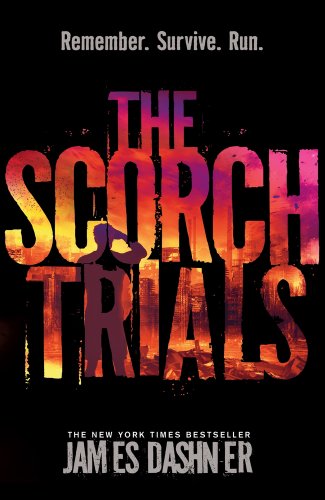
The Scorch Trails by James Dashner

*WARNING If you haven't read book one there are a few very mild spoilers which shouldn't be an issue since they're all predictable. The spoilers only concern events in book one. Except the blacked out word.*


4
The Scorch Trails is the Sequel to the YA Dystopian Maze Runner and is much better than the first one I feel. We follow Thomas again, and despite the same desolation and characters, the book feels fresh and anyone could pick it up and understand and enjoy the story.

Having finally escaped the maze, our group believes everything will be okay, but as returning readers will know, the epilogue of book one revealed something else was going on. We don't have to wait long to find out what's what and the story is quickly on its way in a gruesome way. That first bit with the bodies in the main room area? Gross. But also really good since it got the message across and the cold-hearted determination of WICKED.

Thomas is still a great narrator. He's intelligent and entertaining and all that, but the most interesting for me is the amnesia element of the story. He realises that, in some way, he was involved with the planning of the Trials and the Maze, and the confusion of that- who he was and who he is- just mesmerises me. Also, though we have some idea of why the Trials are occurring (which I expect to be overturned at some point for the surprise), we never actually know. And Thomas, who we believe is good, was involved so it can't have been all bad. As the message creeps up all the time, WICKED is good (apparently). It's a huge mystery that we are kept engaged in because we are fed scraps like starving beasts, and just as we're about to lose interest, we get something more. It's really well written.

I also like how we all assume Thomas would be the natural leader, but he's never chosen. All I can think at these moments is "Why, why, why?"

The little rag-tag group of boys plus Theresa, is split up in a number of ways in no time at all. We are left with enough from the last book that we don't hate Dashner for what he does, and I think that's partly because we can see the world they're in and the situations they face. I only remembered two people from the last book and that was Thomas and Theresa. I didn't even remember who Thomas' former best friend was until halfway through (after he'd been mentioned like a gazillion times). But then, I'm just glad I remembered anyone. Occasionally I'd realise who someone was and what they did in the last book. I guess the whole point of my rambling is to say that maybe one should re-read the book (or an online summary) before picking this one up. I wasn't confused, but I think I missed out on some important details.

There is the beginnings of romance in this book (*groans*) but it's only like the seed has been sown. It uses it more for the (Spoiler- Highlight to see) betrayal element. Which, I have to say was well done. I didn't see it coming because the ambiguity of the events leaving up to it had me doubting myself and then doubting my doubts. It was confusing, but it kept me hooked and reading. I'm actually really glad they romance wasn't over played because I think I'd rage and break things if I had to read Thomas- who is amazing- become a love sick, pining fool.


And a final thing, I absolutely adored the idea of a second, mirror group. It seemed to tie in so well with what one might expect. Okay, they're not overly important here but they did seem perfect and really fitted with the story


I really liked this book, and I'm glad I decided to get it (I was unsure). I think that it's well written, the characters are great and the plot is engaging. The only reason it doesn't have a 5 is that it just didn't feel real. It was more escapism. Of a masochistic kind, if you think about it too much. Or hopeful. Let's go with hopeful.

Thursday, 10 November 2011

Desires of the Dead by Kimberly Derting

*WARNING If you haven't read book one there are a few very mild spoilers which shouldn't be an issue since they're all predictable. The spoilers only concerns events in book one.*


4
Desires of the Dead is the Sequel to Kimberly Derting's novel, The Body Finder (here), and follows mostly the same story. It's a YA, probably also describable as paranormal, and we've got the same retinue of characters as book one, and the same area, yet the idea you walk away with is that it feels like the same book as the last.

In the Body Finder, Violet found bodies and got involved in the serial killer investigation, though originally against her will. For people unfamiliar with the book, Violet has the unique and chilling ability to find bodies of living things that have been killed. They call to her, and though sometimes she isn't aware, she then starts heading towards the body. Once the body is buried, the calling reduces to a point that it can then be ignored. It's a weird ability, but it's good that isn't something she can turn on and off: it's integral to her life.

So the major point is that the story of this book is practically the story of the last book. There is the element of the FBI interest, but the bare bones of it are exactly the same. Accidentally gets involved in murder mystery, can't help trying to solve. For me, this wasn't too much of an issue. As I said at the start of my Body Finder review, I read and loved this writer because I love her writing and she really seems to know how to pull people into a story; people like me anyway. So even though I was aware the story was the same, I still enjoyed the writing and the characters.

I good thing I don't think I mentioned in the Body Finder review was that every so often, a chapter is told by another person. Usually they are somewhat murderous, and the fact that we don't know who it is until later on makes these chapters creepy but impossibly interesting. One can't help reading them and trying to find the clues which are giving away who it is.

The romance in the book wasn't as unbearable as last time; I mean they weren't kissing all the time. She matured a little bit, but I don't think she was that different. The thing is I like Jay as a character, and I think they're a good couple, but when they are actually being a couple I just want to glaze over. The relationship was in the 'jealous' stage a bit, and I wonder if that was just for story progression, but I never felt the jealousy was founded since there was never chemistry like with Jay and Violet. This might get better.

Her obsession with finding the bodies is explained away as something she can't control, an urge, but she demonstrates that she can overcome it and ignore it if she has to, so I can't understand why she keeps going off on her own in dangerous places. I mean no one is that stupid. It keeps the story going but, if there is another sequel, I think I'm going to get annoyed. Three books of a heroine who isn't using common sense are bound to get on my nerves.

A final point before I conclude, I have to say I liked the new element in the story of Chelsea's life. It was nice to see a less sarcastic (the 'You can kiss my buttocks' kind) Chelsea, and I actually see her more. I kind of love Chelsea's outrageousness and frankness- honesty's the best policy, right? Another of the things I loved in book one was the relationship Violet had with her friends because they seemed real and people who'd be fun to hang out with. We didn't see as much of Jules and Claire this time, but they were always light relief more than actually important.

All in all it was good book, and if you liked book one, you'll probably like this too. The premise is just as interesting and a murder mystery is by its very nature engaging, and I think that most people won't be bothered by the similarities with book one.

Tuesday, 1 November 2011

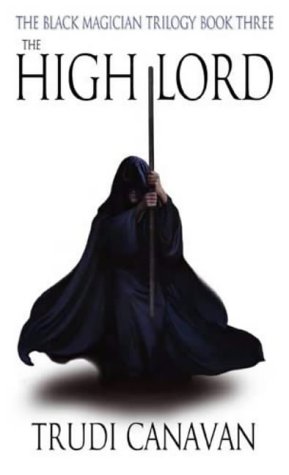
The High Lord by Trudi Canavan

19/08/2011

4
The High Lord by Trudi Canavan is the last in the Black Magician series and is a fitting, bittersweet end to the trilogy. It was believable and enjoyable to read but again left you… wanting, I guess.

The plot picks up a bit of time after Sonea has defeated Regin and her life is now a bit less hectic and more comfortable. The book focuses now on Sonea and Akkarin and their relationship. There’s not a lot I can say with major spoilers so I’ll skip to the end of the book, which is a bit less so. There’s a small magician war and- big surprise- black magic is quite important for even thinking you might win it. It is good to see Akkarin and Sonea working together and we see the similarities in their morals, though the cause is slightly different. I liked (even though I expected it) that black magic was important and that Sonea learnt it in order to save the guild because her actually choosing to learn it required a bit of reasoning and journey and the consequences when she first uses it are also rather enjoyable to read about.

On a side note, we also learn about Akkarin’s past. Because he was such a mysterious figure in the last two books, it’s nice to see and learn about his history. It’s not all in big blast either, though it seems that way. There are hints along the way that there is something else and even when he tells that, I always feel like he’s holding back things that we’ll never be told.

The romance in this book is more believable than in book two, so I don’t have too many complaints. The reluctance of Sonea’s lover is amusing but- we know- in vain. In fact, she was as surprised as he was at who she started crushing on. And there is always a little doubt as to his love that again we can’t really confirm.

I can’t think of anything I didn’t like in the book, but there were parts I thought were useless and pointless to the book that I wouldn’t have written in myself. There was also sometimes a bit too much detail that, though interesting, I glazed over when reading because I was more interested in the story and plot progression.

So, all in all, a nice end. I’ve read better endings (this one seems perhaps a bit abrupt) but it was right for the series, I guess.

Saturday, 29 October 2011

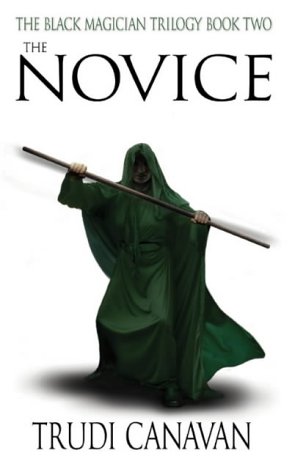
The Novice by Trudi Canavan

19/08/2011
4
The Novice by Trudi Canavan was interesting for me but most readers would say it was boring and nothing happened. And, because I’ve read a lot, I kind of agree.

The majority of this book takes place in the University and we follow Sonea as she begins to really learn magic and the bullying that goes on. As the ‘slum girl’ the other novices mistreat her and bully her. She tends to hold her own (which leads to interesting, yet now well-repeated suspicions about her power) but eventually it gets unbearable for her. Reading this made me genuinely angry, more so than one might expect from such a fantasy book. I hated that the ‘nobles’ did this to her, but understood the need to remind us why we agree with Sonea and perhaps why Sonea needed it in order to stay herself. Thankfully, it isn’t gruesome: just the kind of bullying that wears someone down and all but destroys their character.

There wasn’t a great deal of character development that I noticed or remember besides maturity in Sonea. In this book, it seemed that the focus was on our protagonist reacting to antagonistic secondary characters and the primary antagonist. The two parts I found most enjoyable to read was Dorrien’s visit- and we all knew where that would lead- and the original part when the High Lord stepped in and Sonea’s situation changed. I found it very intriguing to notice the change in her life.

The highlight of the book was, for me, the lessons. Some would hate this but I loved watching Sonea advancing and getting better and actually the lore that some of the lessons delved into. The combat lessons were made to be the most interesting by the fact that they had action and adversity in them. It was also marvellous to see Sonea’s magical strength compared to her fellow novices and also how she occasionally surprised them with an unexpected technique or strategy.

The other part to the story told of Dannyl’s new role of ambassador and we watch him as he learns about ancient magic. The lore side of this is interesting, but also is seeing the other Allied Lands and their customs and people. Tayend, I think, was a nice addition to the novel because I haven’t personally seen as many homosexual characters in books as I’d expect. And he was scholarly, which was nice. Frankly, he was a librarian so I felt little endeared to him merely because he was bookish.

Ultimately, it wasn’t a bad read, and the last scene was great to read. However, even I felt a little let down at the end because I thought something more earth-shaking might have happened at some point in the book: as it happened, they were all relatively unimportant.

Wednesday, 19 October 2011

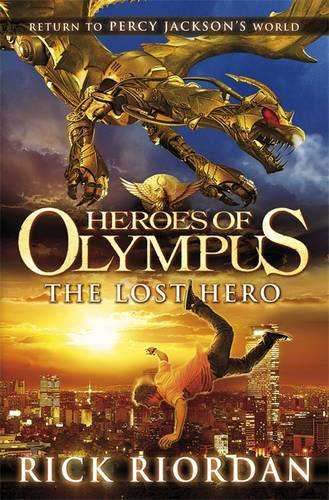
The Lost Hero by Rick Riordan

4
The Lost Hero is the first book in the sequel series to Percy Jackson & The Olympians series. It a fantasy book series where the Greek Gods are still around and father children: the Demi-Gods. These children perform quests for their divine parents, all the while educating readers on the basics (and sometimes not the basics) of Greek Mythology and characters.

It's a fun series that I read with a little bit of guilt. I always buy these for my brother, then read them without telling him. They're short so there is no drawn out periods in reading them, but they are entertaining and fun to read. I think of them as comfort reads because they are so easy to read, even if the humour is cringe worthy and awkward sometimes.

Anyway, this book doesn't even feature Percy Jackson directly (though he is mentioned and he is in the sequel to this), instead following Jason. Jason has amnesia, but seems to know a lot of Roman mythology and is combat proficient. He even comes out with bits of knowledge he even seems to be surprised to know. They go on a quest to try to rescue Hera (mother of the Gods) and in the process restore his memory. He goes with Leo Valdez and Piper McLean, both revealed to be demigods as time goes on. And that isn't a spoiler. If you know the series, you know it's going to happen and anyway, you can probably see it coming a mile away as a new reader.

I like the characters in Riordan's books because they tend to be fresh, entertaining and bearably cliché. Okay, all of the characters tend to fit into a certain stereotype of person and follow that, but I think the age the book seems to be for lets you get past it. I'm not sure if it's YA or MG or whatever (I'm not confident on my genre classification) but I think it isn't YA since it seems too young, at least in my opinion, and much to happy-go-lucky.

The best things for me with these series is that it's the type of simple, urban fantasy I can't help but like where the teens have powers and are teenager-y and fun about it, while I love the element of mythology. We see Medea and Midas in this book, but we've met Circe, all the Greek Gods (I think), Medusa, Cerberus and more that I can't remember or whose name I have forgotten. But it's highly educational, even if you think you know mythology. The way the Gods and characters are shown in a modern world is interesting. I actualy think that the mythology is the main thing I like about the books, and that the plot is mostly peripheral.

It's a good, easy-to-read book that I think any fantasy reader can like if they're not too fussy with a bit of cliché and few bad jokes. The adaptation of Greek Mythology to our world is just mind-bogglingly well done and is something to read the books for if nothing else. And if you're already a fan of the books, this novel at least sticks to the tried and (successfully) tested formula.

Happy Reading!

Tuesday, 11 October 2011

Scorpia Rising by Anthony Horowitz

22/06/2011


4
Scorpia Rising by Anthony Horowitz is the last book in the Alex Rider series. I have to admit I gave up on the books after Ark Angel which was 3 books ago (I think) but as with most readers, I kept with the series out of a determination to know what happened.

As it happened, the same thing happened that happens in every book- except that a relatively important minor character was killed and Alex Rider is emotionally broken. No biggie really: a shock, but I could have predicted it if I gave it some thought. And I saw it coming 50 pages away. Horowitz is a marvellous writer, and that is part of the reason I probably read the books as well, but I think he has a set pattern of writing that he tends not to deviate from with Alex Rider:
  1. Alex Rider accidentally recruited by MI6
  2. Starts Mission and all seems normal
  3. Clues point to conspiracy
  4. Conspiracy Discovered
  5. Starts to combat conspiracy but fails
  6. Taken into custody by enemies and all hope seems lost
  7. Rider has actually planned an getaway and succeeds
I suppose I should tell you the premise of the books now.

They follow a teenage boy (just turned 15 in this book) who is hired by the British Secret Service MI6 and goes on missions that only an agent who appears as a teenager could do. He was trained by his Uncle for this (unbeknownst to Alex) and is therefore a super spy and very resourceful. I won’t ruin any of the books, but they just deal with his missions and revealed conspiracies and more personal revelations.

They are good up until Scorpia which was the fifth book.

The plot of the book is straightforward and for the most part it was very predictable for me as someone who has read the other books by him. The prose is very good and Horowitz, ever objective, is a good writer that can make the book fast paced, engaging and very hard to put down.

The characters are always a good part in his books: they have suitable back stories, clear motives and a few skeletons in their closets. They are developed really well, but in 8 books, that’s hardly surprising. In fact, I feel that by this book he can’t go anywhere else with them so it is good that this is the finale. I think that he does a good job of tying up the loose ends (though there aren’t many that he carries over between books) and leaving a reader suitable satisfied that everything has been dealt with. It’d be nice to know what happens to Alex, but it’s not a pressing detail and can easily be overlooked.

There is the tiniest of bits of romance in the book but, by this point, Horowitz has cut it down to such a minimum that he only references it on a few occasions: there is actually no romance in this book.

I loved the books and, as I’ve said, I only read this one out of loyalty and the need to know what happens, no matter how dull. I’m content with the ending but overall this is a mediocre book compared to other ones: a cheap thrill, if you will. Nevertheless, it is not a bad read. Maybe I’ve just gotten tired of the books over time. I give it a 4 only because of previous like of the trilogy and Horowitz’s writing.

Tuesday, 4 October 2011

City of Ships by Mary Hoffman

17/06/2011


2
City of Ships by Mary Hoffman is the fifth instalment in her Stravaganza series. It’s a series of books about students aged 16 and up who can travel- via talismans- to a parallel universe not unlike fourteenth century Italy.

The books all seem to follow a general pattern of a surprise visit to Talia (the parallel universe), disorientation, finding ones place in Talia, life improves back home, calm, problem in real world affecting parallel one, fix problem, main problem in Talia (usually fantasy violence), solved indirectly by protagonist, everyone’s happy. That may seem lengthy, but to my memory they have all genuinely followed that pattern without much notable deviation.

That isn’t to say they are bad books though: they are interesting and not taxing to read. They don’t strike me as international best seller material, but that’s only my view and in my taste; I believe in actual fact that most people would enjoy them.

They are young adult books and it is pleasant to see that besides a few necessary clichés, they are mostly true to reality. It’s like a breath of fresh air. They don’t speak with slang every other sentence and they are typically normal (if a little middle class). I rather enjoyed this book in that I think it branched out a little. It used elements from previous novels that had been mostly untouched when they were moderately important and brought them to light. It also spoke about rape which I don’t recall in other books: or any such heinous crimes. Then again, it’s been a long time since I read them.

But these new things being brought in may also be the beginning of the end. I’ve read and watched enough of the fictional media to know that when something new is brought in, it can occasionally feel like a grasping of straws. In the interest of making the novel sell and be interesting, the author introduces a new dimension to the novel that hopes to ‘shake things up’ and keep consumers buying. I don’t think the new information is too much like that- it’s all necessary at the moment. But if the next book is not a finale, I think I am right about this.

There is little else to say about this book: it is well researched and the characters are fairly relatable. Some hicks such as when the narrator uses a colloquial phrase unlike the usual objectivity and sometimes the characters are written for a younger audience which tends to make me feel alienated: like Hoffman has forgotten who she’s writing for.

I wouldn’t urge anyone to go out and buy the book now, but it is worth loaning from the library for interested parties. Just loan the first in the series: City of Masks.