Showing posts with label Magic. Show all posts

Saturday, 2 June 2012

The Magician King by Lev Grossman


4
Following the events of the magicians, Quentin Coldwater is now one of the Kings of Fillory. It’s something he never dared to dream he’d have…but he’s still not happy. He’s restless. In trying to find occupation in adventure, Quentin stumbles upon something much more cosmically important leading to revelations and undesirable outcomes.

Though this is a sequel to The Magicians, this book doesn’t really feel that way to me. There are some references to Alice and Brakebills (the magic school) days, but they are almost pointless in the grand scheme of things. If you haven’t read the Magicians, it won’t be a problem in terms of understanding the story. I mean, if the names had been changed this could have easily been a separate stand-alone novel. For me, this wasn’t the best choice since what I like about sequels is those nods to the first book or when something in book one directly affects book two. For me these weren’t really there, and though I can appreciate the book it doesn’t feel like too much of a sequel to me personally.

The magic aspect was also elusive. The world was fantastical and there were other times when the magic of landscape was obvious, but other times it felt like the book had forgotten it was a fantasy book and things like magic were forgotten. Book one was a bit like this, but not to the extreme of the Magician King. There is only really one bit that this seems to go away, when Quentin is blasting magic left, right and centre.

But this highlights the crafting that has gone into the book. One thing Quentin says is that he doesn’t feel like a king, let alone a magician, most of the time. By the lack of magic and these things, we really feel this too. And it annoyed me, even enraged me, which only meant I could understand Quentin better.

This was the same for the general idea of Fillory and “real-life magic”. Quentin reminds us every few chapters that magic in books is often good and there is always a happy ending. Even the sadder endings are not so harsh on the characters. This book is not like that though. Even though book one improved at it’s very, very end, the whole final sequence was heart-wrenching and one of the most depressing endings I’ve ever read. In the Magician King, I’m reminded of this again. I don’t want to give anything away, but Quentin’s fate is almost unforgiveable. That one line that Elaine gives just made my heart sink, since I knew it wouldn’t end well after that.

There are also other dark elements involved, especially in Julia’s story. She was never accepted to magic school so she pursued magic however she could and sacrificed almost everything dear to her to get it. And how did that end up? For a long time it was horrifying for her. There’s this one scene which I shan’t repeat and which I don’t even like to think about which disgusted and depressed me so much. But at the same time I couldn’t stop reading. It’s was gripping and, though it pains me to say, realistic.

On a personal level, I struggle to read Grossman’s book. I get headaches from trying to process so much and some of the events genuinely affect me and my view of life for a short. I’ll be depressed, or feel lost, if only for a few hours. That could just be me (!!!) but I credit some of it to these books and these stories that seem to affect me so much. Sometimes I was just reading in a daze.

This book is something else, in a good and bad way. It’s bad in that I sometimes just want to walk away from this book and turn my back on some detestable truths, but then it is just so good at the same time that I can’t even begin to explain. This whole review is my trying to just give you a glimpse of how I feel about these books because in all honesty it’s so mixed up and indecipherable even for me. So read these if you want something magnificently compelling, but don’t say I didn’t warn you.

Sunday, 22 April 2012

A Storm of Swords by George R. R. Martin

Part 2
4
The continuation of the Song of Fire and Ice reaches a kind of close. This is the end of the first half of the story, and as such shows a lot more finality than previous parts and, in general, feels like a more typical fantasy book for this conclusiveness.

I've decided that I might do this review a little differently. I've reviewed the first two books here and here (plus an intermittent half-way in this book here) and in general I feel much the same about most of what is happening. So I thought it might be more apt and easier if I list my likes and dislikes of this series, and end with a comment on anything new in this book. It saves me trying to make the same point a third time, but trying to put a different spin on it.

Likes
  • Plot- Say what you will about Martin, he weaves a fantastic story. He doesn't really have any sympathy for his characters and verges on cold about he is more than willing to put them in dire straits and make the outcome unlikely every single time. I've mentioned a few times how one does not simply 'expect' with George R. R. Martin (that's an accidental meme/LOTR reference) and it makes for much more gripping story and also a much more difficult one as a reader. You are telepathically begging him to spare your favourite characters. The nicest you can expect it some kind of hideous wound or thrown into an inescapable circumstance, and you'll take that in your despair.
  • Characters- Another typical story trope, but again excellently done. He crafts really well rounded characters, though in general I feel the Starks are all a bit too heroic sometimes, and Brienne too idealistic. But people like Jaime, Tyrion and Daenerys are effectively evil- or at least associated intimately with an evil faction- yet we learn about them as individuals and grow to like them. Those three are probably some of my favourites. Take Jaime: he's an oath-breaker and unbearably arrogant and rude, but he's more loyal than most and has a powerful sense of gratitude, familial love and duty.
  • Magic- His attitude to magic is refreshing in a fantasy book, and that's a lot coming from me. I usually like magic and lots of it, but here I enjoy how fleeting and mysterious it is rather than something which makes the users superior to their peers.
Part 1
Dislikes
  • Misogyny- Though I think Martin isn't a misogynist, the world he sets his books in is medieval. As such, women were expected to look pretty, get married then make babies until they died. They are completely and unrelentingly objectified by the men in the books. In general, the female POVs in the books are shown to be neither powerless nor accepting of this so it isn't all encompassing, but the nature of some of what happens is sickening.
  • Cursing- I'm not the kind of person who uses profanities or approves of them if used in excess, but, for whatever reason, the characters insist on using words I refuse to utter even in my own company. As such, Martin tests my patience sometimes with the male characters in the story who use two four letter words beginning with 'C' as often as they breathe and use others with other select changes in the weather.
  • Wanton Brutality- That's a phrase I used in another review which sums it up nicely. Be it violence, torture, rape or worse, GRRM does not pull punches. In fact, he packs them with iron and heats them such that they brand, even scar you. Seriously, sometimes I've felt physically sick reading some descriptions in these books.
  • Death- As I mentioned above, no one escapes the bloody pen of GRRM and he will happily kill, maim or otherwise make characters lives a misery in the course of his books. This is something I also appreciate since it makes the stories gripping, and better than some other novels I've read; but at the same time I wish it was a bit less desolate and hopeless sometimes.
In this book, there are two new things: Finality and Viewpoints. We're given some new people to see through the eyes of- purely because the little conflict in book one has escalated to a national schism and there are all sorts of inner problems of each of the factions. It's like that St. Ives riddle where the numbers just keep growing as algebraic powers until the number is larger that we imagine. I digress, because it is not that bad, the point I was making is that we get a viewpoint in basically every story there is to tell.

The finality, which I mentioned at the beginning, is also bizarre. GRRM tends to leave people mid-story and move on and its disconcerting to leave these books for too long. So much is going on all the time, and keeping it straight require you to be reading the novels in succession. The ending of this book felt more conclusive, because A Feast For Crows is a catalyst novel connecting this book to A Dance With Dragons. The idea was to give characters time to grow up so that the story could move on to where he wants it to be. I'll say this though: I have no idea where that is.

The novel is the usual stock for Martin, in my opinion, so take that as you will.

Monday, 9 April 2012

A Clash of Kings by George R. R. Martin

Possible spoilers for book one but not this book, but they will be highlighted such that one can avoid them!


4
This book two in Martin's A Song of Ice and Fire series and is an extremely long read (though I hear A Dance With Dragons is longer still). It is continuation of every and all events from book one and is just as hard-hitting and, in some ways, wonderfully deplorable. In my opinion, it is the better of the two since I was much more interested in events than in book one.

The plot in this series, for anyone who hasn't read the books, is a sprawling mess of utter chaos. The best analogy is to imagine a plate of spaghetti, and each string of spaghetti is a plot line and reading it is like trying to find the other end of the spaghetti WITHOUT yanking it out. It is utter madness sometimes. You seem to have your main plot and about 4 other sub-plots, per viewpoint. And then there are around 6 view points. So you have a grand total of around 30 plots which you have to try, in vain to keep straight. Early on in the book, it's even worse. I commend Martin for not just tying off the old plots and moving on, but the start of the book holds onto about half of the plots for about a third of the book, but still insists on bringing in more. What I'm saying is that these are highly confusing books a lot of the time, and sometimes you'd be reading something and only realise about 3 pages in which plot it pertains to.

This same issue is with the characters, though it is less pronounced. The back of the book lists every major and minor character of the major factions on the book, and I seriously believe that every one of them is important in some way. Finishing the book, I astounded myself with how many characters I managed to keep straight in my head. Admittedly, I just had to keep reading blind sometimes and hope this character wasn't too important.

It's a credit to Martin, I have to say, that despite being occasionally muddled I managed to know what was going on. How I think he does it is by defining everything with certain events of names. Practically all the characters have a defining a feature- some are "the Knight of X", they may be named "The [noun]" or they were involved in some conquest- and they will be the only ones associated with this. It's fantastically done when I think about it.

Anyway, down to specifics.

Once again, one of the things is disliked was the wanton brutality of the books, and the banalisation of rape and prostitution. I read some response Martin gave on these fronts (I'm not the only one who is disturbed by it) and he defends it by saying that it is historical and medieval England was like this. He doesn't like it any more than we do, but he has to right a realistic, truthful story. If that means it must be gritty and disturbing, so be it. I can accept that since he's right to be honest in his story, but I'm retaining the right to dislike it. It is too often brought up, in my opinion, and hate that the men are often so flippant about it. It doesn't usually detract from the story, but I think that if anyone has particular sensibilities or particular revulsion to these things, stop while you're ahead; since I expect it to get worse as the book continues and fighting grows. I wonder if I would have ever opted to read these books had I known they were so....so like this.

**** SPOILERS FOR BOOK ONE IN NEXT PARAGRAPHS UNTIL I SAY OTHERWISE!!! ****

I actually got more invested in various stories this time around. Last time, stories such as Jon Snow's, Sansa's or Arya's were just not at all interesting. However, at the end of book one, Arya has fled the castle, Sansa dislikes Joffrey (and, forgive me, has finally gotten some sense) while Jon has learnt that the Night's Watch are to go beyond the wall. In book one, I could read Jon's chapters easily enough for the same reasons I could read Catelyn's and Bran's: because despite not being terribly interesting, they were written and I liked the voice's. Also, they both had points were they were actually interesting. With Jon, I felt his story had so much potential to be interesting, but it just wasn't. I understand they had to train, set up loyalties and what not but there was wasted opportunity, in my opinion. There was always the feeling of a growing threat and it infuriated me that it was never realised story-wise.

Tyrion and Daenerys are both just as good though, if not better. Tyrion is whimsical and despite being a Lannister, I'm actually going to accuse him of having a great deal of sense and even a few morals. In some ways, he often strikes me as the most human of the characters and even though he has his weaknesses and short-comings (no pun intended), he is probably the only Lannister I would want to be King. I think he has the good sense to look past his own life and desires and do what is right for the kingdom as a whole.

Daenerys disappointed me a little since very little happened in her story besides a lot of wandering around, hopeless, and sitting about dreaming about her future. I think she had fewer chapters than last time as well so we didn't see her as much. But the dragons....man, do I love them! I squirm with happiness whenever they do anything and, at one point, it says how she was reclining in cushions with her dragons around her. Bliss, utter bliss.

There are two new views as well: Ser Davos, a Knight of Stannis, and Theon Greyjoy. Davos had a nice voice, and I did like him, but I was more interested in him because Melisandre and the magic (?) she suggested she had.  Theon is more interesting, but only because I hate him from the bottom of my heart. I feel sorry for him since he feels abandoned by his own family, but does he need to be such a debased and detestable individual? He has no value for women or anyone less than himself. In so many ways, he is just like a Lannister in his overwhelming idea of self worth and importance. And the things he does- the way he is- just disgusts me. The bit with Bran and Rickon...I just had to stop reading for a short while. I felt my heart stop; I stopped breathing in shock. I was just blown away at how much I could hate a character.

**** SPOILERS OVER ****


Overall, I was impressed with this book. If you read book one and were a bit dubious, I think this book will set your mind at ease that this is likely to be an enjoyable series and that you should definitely keep reading. I only warn you to expect to be reading this for a while; my copy was around 900 pages.

Saturday, 31 March 2012

The Girl of Fire and Thorns by Rae Carson

5
This a YA fantasy novel that begins on the wedding day of sixteen year-old Princess Elisa. Being the chosen one, the one every century born with the Godstone in her navel, a lot is expected from her as a conduit for God's will in the world. Yet this stone, a priceless blue jewel, is unique enough to cause a host of problems.

I have to say that the reason I gave this book a five rating is because it's has been a while since I've been unable to put a book down and I've had this need to know what happens next: that insatiable urge to keep reading. It's probably courtesy of it being a YA fantasy that it was as fast-paced as it was, but it's still slower than other YA books thanks to the fantasy elements. The other reason I loved this book so was that at the end, when she confronts the Animages (which isn't a spoiler), I was just buzzing. Had I been a cat, I would have purred uncontrollably since I was experiencing a high like no other: where I just wanted to read as fast as I could and ascertain what happened, yet restricting myself to understand fully what would transpire (and also to extend the feeling).

One of the things that hit me early on as a pleasant surprise was that are heroine was fat. Not average sized, and definitely not thin, but undeniably fat and a lover of all things edible. I mean, I got hungry reading sometimes! But no, I like that books don't shy away from these things, especially in a protagonist. Too often they're the athletic type, or if not they are rarely fat: the general description is someone who couldn't be described as thin, but is healthy and fit. There is nothing wrong with that, but figures show that most people think of themselves as fat and obesity is a problem in the Western World.

I felt the story was a tad clichéd at times: a mix of princess in a new country/city, the chosen one and the less loved sibling. But Elisa's character- her voice, wit and attitude- made everything seem shiny and new and made me love the book so much. It underlined how no one judged her for her weight (mass!), but valued the quality of her mind or personality. Her strength of character. But again, this is a small part. Weight doesn't define who we are, though it is a huge anxiety in our society. As such, it never defined Elisa as a protagonist, as a princess or as the chosen one.

Other characters in the book were fine, but less interesting than Elisa and, on occasion, less fleshed out. It makes sense though in that because Elisa was such a good character, there was a good chance one would feel like this. Cosmé, Alejandro or Alodia all seemed to fall into a set character type for fantasy novels- yet in fairness they had some more exceptional qualities. Personally though, I felt they were mostly plot-orientated. They developed somewhat and were relatively interesting, but they were there to fill a function mostly: and their development wasn't entirely unique or unprecedented.

One thing I didn't think I'd be saying when I started was that I loved the religion element in this book. I'm not religious, and I didn't see why it was important early on: I found it distracting and in some ways unnecessary. But you slowly realise how important it is and, rather than being solely about religious zeal, it becomes apparent how important it is as part of this world; both as a motivation for characters (good and evil) and the impact this has on the world. Part of me says this is merely their interpretation of events and that there needn't be a God, but it doesn't matter. Part of me expects a sequel to have an atheist character who argues exactly this.

The God element is also fantastic in that my favourite bit involved the words Elisa uses whilst...optimising the Godstone. I always think the archaic sound of the Bible or ancient texts sounds powerful in some way: probably because it is, A, unusual to our ears and, B, writers had a certain way (with a certain tempo and use of stresses) to write. It really made that scene for me.

If you like fantasy, it is incredibly easy to recommend this, I think. It doesn't complicated the simple and well written characters with a well-formulated plot means that anyone who doesn't have a vendetta against fantasy will has a good chance of seriously liking this book. I rank this up there with Night Circus, so I hope you can understand my love for it.

Friday, 30 March 2012

Dark Lady's Chosen by Gail Z. Martin

Though there are no spoilers for this book, this book contains spoilers from books one, two and three. You have been warned!!! (It's also early on in the review.)


4
The next book in this (seeming interminable) series is the continuation and arguable conclusion of what occurred in book 3, Dark Haven. We see the end of the plot to kill Kiara, the result of the War with Curane, the fate of Cam of Cairnrach as well as the fate of Dark Haven itself- an ending wound up with the lives of Jonmarc and Carina.

This a well structured book, in my opinion. It seemed that Martin had accepted that, by the end of Dark Haven, everything was coming to its end; for better or for worse. So the majority of the book actually only takes place over 5 days, and the chapters in those days are split between the multiple story lines. I get that some people would rather dislike this (arguable) mess, but it worked for the book. On her site, she says this book was about the aftermath of events that are the settling down of chaos and order into some sort of balance: something I'm going to venture in saying is represented through the written style. It is a bit hectic and indiscernible at times, but there is a clear order and structure that is adhered to.

All the plots seem to figure themselves out in the expected manner: people survive, at a cost or they survive only to find a greater challenge. I don't think anyone would be blown away by the outcome of events since you you've probably been expecting it and though you're obviously happy with the result, you won't be overflowing with excitement after having read it. On the other hand though, you'll never be inconsolable. So if you want a book which isn't going to stress you out to much as a reader, but you can still enjoy reading, this is an excellent choice.

Getting more into specifics...

I felt that Kiara's plot and storyline got slowly more repetitive as time went on. She'd make the mistake of feeling safe or powerful, and then a threat would rear its ugly head. She would survive it, but it underlines the precariousness of her position as well as risking something concerning her unborn child. I am being somewhat cynical, but it has to be said that for an interesting character who could have a had a much more interesting story (in my opinion) it was annoying that it descended into repeating itself. The most interesting bit was the end of her plot. I'm not saying that it was great because it was over (though that lingers at the back of my mind) but because the possible repercussions are interesting. I believe her child will be a mage and that the excess of wormroot (a magic inhibiting drug) in her system from the dart will give the baby an unusual tolerance for it.

I'm of the same sort of opinion of Cam's story too. I feel like his was only used to remind us of the divisionists and the widespread chaos in the kingdoms; otherwise it wasn't too important.

Tris' story was when he was still at war with Curane. His story was also a tad dull, but the ever-looming battle and the mystery surrounding what to do and what new horrors would be encountered kept be reading quickly through these pages. Give whatever meaning to it what you will, I really enjoy reading about battles that involve magic and average soldiers. Part of it is my inbuilt love of magic, but I think I just like the idea of combat magic since it is the most instinctive side of magic and can have interesting consequences. What I disliked about this portion was that Tris seemed to be constantly at the edge of his power, but still managing to hold on. His comments on his growing fatigue and loss of power got a bit dull.

For me though, the Dark Haven story of Jonmarc and Carina was much more interesting. I think that might have been because it was the one story that wasn't so clear cut. The others ones needed their players to survive in order to continue. This story only needed one and, in Carina's case, that one didn't need to come about completely unscathed. If I look back on their story now, the same cynicism takes over that they were hardly the most interesting and that the story was hardly unique. There were conflicts with the revolting (as in revolution) Vampires and Jonmarc's fear of loosing Carina. Carina had her own problems in trying to avoid the taint of Vampirism that warred with her healing magic for dominance. I guess their story was also interesting because it was a chance to learn more about the flow: the river of magical energy in these lands.

So I was impressed with this book. Maybe Dark Haven was a book to set up this one which, in so many ways, was much better. It's actually the end of the Chronicle's of the Necromancer Series, since the following books are a separate series which (I suspect) have a more active focus on Jonmarc. Though maybe it instead focuses on the children of the people on these books: the series being the symbol for the next generation.

Also, bonus points if anyone know who is on the front of this book. Is it Carina???

Saturday, 24 March 2012

Dark Haven by Gail Z. Martin

Though there are no spoilers for this book, this book contains a major (unavoidable) spoiler from books one and two. You have been warned!!! (It's also early on in the review.)


4
This the third in a series of fantasy, sword-and-sorcery novels following Martris "Tris" Drayke but now begins a split narrative that also follow Jonmarc Vahanian who is Mortal Lord of Dark Haven, the Land of the Vampires. Both are at war with one another and we see that though, perhaps, the major events are now ever, their effects are still being felt and the problem lingers still.

In some ways, I wasn't looking forward to this book. I like fantasy because I like magic and mythical creatures, and though Jonmarc is great character, I was initially worried that the magic (which, as I said, is the core fantasy element that I like) would take a back-seat. In some ways this is true, but it still took up half the narrative.

Jonmarc's is based on the fact that he is mortal among vampires, some of which are unwilling to have a mortal Lord. The central elements seem to be that he is rebuilding an ignored land to help its deprived inhabitants, as well as dealing with curbing an uprising and a war between the dead and the undead. Tris now the (SPOILER) King of Margolan is trying to do something similar as he stabilises a country in turmoil, secures the succession (since the Usurper was violently promiscuous) and enters into an inevitable war.

I point both of them out for a particular reason: they are both trying to help people who are starving and they both say how, though a King and a Lord, celebrations should be muted and in-extravagant. Yet it annoyed me to see them eating into heaps and heaps of food, dress up in expensively tailored clothes made for the occasions and basically spend truck loads of money. They proclaim the need to help and defend the interests of the people and say they cannot consider huge extravagance; the needs of the people are more important. It just frustrated me that this seemed persistently ignored.

That aside though, the plots were straightforward, run-of-the-mill stories, but well done such that you probably wouldn't be bored. The things I said earlier about the plot is basically just that in the long run, except with internal dialogue, romance and specifics. Yet the magic in it is that the characters involved are so interesting. Rather than being high and mighty, they are normal people who would fit in easily in a modern age because their outlook is understandable and they themselves are easy to empathise with. There is none of that sickening nonsense about "duty", "honour" and "loyalty" that is the Knight's code. They are still people, despite their rank. And they're interesting too. They come from different backgrounds- Vahanian is very much a rogue and former outlaw- which means that there's diversity between them. And, which I consider a huge bonus, the women are written as being capable alongside capable men. Too often I feel that though a balance is almost struck, few writers get across an idea that the female characters can defend themselves as well as having men who have a vulnerable, soft side. But I see it here (most of the time) and it's nice.

The magic in the book is something which is still important. In previous books it talks about how the flow (source of magical aptitude and power) is becoming unstable and chaotic due to dark magic, and this continued in the book. Tris is actually a spirit mage, so he can summon and converse with dead spirits and all but go to the land of the dead. It means that one of the main characters is constantly aware of the flow and can relay to us what happens concerning it. Again, it's run-of-the-mill stuff, but it's well done.

Romance...I don't know. It's there but I get this feeling that everyone keeps pairing up. Tris and Kiara are still a nice little couple and I appreciate how this isn't mad love but companionship and support: which I like to think is a more realistic relationship. There's also a whole thing involving Kiara as the bride of Tris, but I don't want to give anything away on that front since I found it so interesting. Vahanian has Carina, and their courting continues and develops fairly quickly, which is why I feel like people are being paired off. I like them as a couple too, especially since they were always at odds (though it annoyed me that this has kind of dwindled and been lost).

I'm not doing a very good job of selling this book to anyone, but I genuinely believe in my heart of hearts that this is a good book and part of that the reason is because Gail Z. Martin is such an excellent storyteller and craftswoman  for the characters and turmoil. One of the huge boons of this and the other books is that it is so easy and so pleasant to just get lost in this story for a few hours.

Wednesday, 7 March 2012

The Pain Merchants (Shifter) by Janice Hardy

British Cover
4
Nya lives in a world of Healers, Takers and Pain Merchants: people who can take pain from people and either store it away or turn it into powerful weapons. But Nya has a unique ability to actually be able to shift pain (hence the American name of the book) from one person to another. The story is what happens when this ability becomes known by those who would use her for it.

I'd read Janice's blog for a while before I decided to get the book, and in some ways I was surprised. I think I expected it to be more mature than it was: but I was forgetting that this is a teen book, perhaps Middle Grade (but I'm not entirely sure what Middle Grade actually is). Saying that though, I still really enjoyed the book and the world Nya lives in was lovely to  see and experience.

The healing idea is marvellous. As I said in the introduction, the ability is to take away the pain from an injury and- optionally- to be able to heal that injury. The pain is held in the healer's body until pynvium can be found: a rare metal that (when raw) is able to contain pain. In some ways, it's straightforward, but then I didn't want a huge and complicated magic system- and in it's good that it isn't magic. What's been done here is much more involved and sophisticated, in my opinion. One idea has been taken: that someone can heal someone else. What has then been done is that it was fleshed out. A problem with some magic in books is that- like in Harry Potter- no end of magic can be cast without personal effects. There is just an endless pool of magic while the magic itself is based on knowledge and creativity. Much better are the systems that cause the energy for magic to be taken from the caster, but that is an over-used idea. Janice's system is great because it really is a real effect: the healer will completely experience the pain of whoever they heal, they just won't have the physical injury.

The city itself was interesting too- as was it's place as city in a world. There is class divide in the city between the aristocrats who dominated the land through war and the natives who fought them. None of the descendants of those natives have positions of power, they-  the Gevegs- are beggars and manual labourers who work so that the Baseeris stay rich. The animosity between both groups is always apparent and it's the underlying tension throughout the city. A Baseeri believe that every Geveg's life is worth less than his own, and they would let thugs or worse do what they will with them. They turn a blind eye for their own protection.

American Cover (I prefer)
The League is almost the middle ground between Baseeris and Gevegs, but the leadership and power indicate quite clearly to whom the preference is directed. Since the skill of healing is valued, though not exceptionally rare, anyone will be accepted into the league and, once there, they dedicate their lives to healing others- in theory for the good of all. But in such a powerful establishment, there is obviously a level of corruption and wealth that is sadly necessary. The League has to feed, clothe and train the healers so money has to come into the institution. What's more, a Baseeri noble would dislike a grimy Geveg healing him so they must also be kept elegant and presentable. The League is supposed to be a good thing, at least that is what I feel. And I get the feeling it was a good thing until the Baseeris arrived as part of the unnamed Duke's conquest to reclaim independent lands.

One of the things I didn't like was the characterisation. I'm not going to make an issue of this because it isn't at the same maturity as some things I read so there can't always be the same moral ambiguity. Good and Evil are mostly clear cut, though the Pain Merchants (which is like a mob version of the League) are somewhat unclear. Even Nya, who is stealing eggs at the beginning, shows some sort of ambiguity. Yet it's all rather low-key and the manner of it makes it clear whether it's a good or bad deed. Nya is starving, so theft can be acceptable; and she also offers to work for her food once caught. She is a good character in a tough situation. As for the Pain Merchants, they are seen as ultimately bad. Though they might do good, it's for capitalist reasons of money-making.

The other thing  noticed myself disliking was some of the slang in the book. Some of it was local dialect, but when "cos" starting being used instead of "because" or " 'cause" the grammar freak in me lashed out and I got rather annoyed every time it was used after. I do remember some others, but that is the one that annoys me the most. Also, some of the names were bothersome since they seemed to awkward, but I think I'm just being unwarrantedly picky.

As a fantasy book for younger readers, I do think this was quite good. I would have preferred a more mature book, but knowing my old tastes, I know I would have liked it. I think the fact I read it all in a day is a nod towards the fact it is a good book. If you're looking for something simple, enjoyable and fantastical, look no further.

Sunday, 29 January 2012

Flame of Surrender by Rhiannon Paille

3
This is kind of Young-Adult Fantasy Romance, where our two narrators are actually elves. Both of them are said to have great potential to either enhance or destroy their world, yet both have no control and no aptitude. They seem less than average and, among their own kind, almost lesser. But as one might imagine, this book delves into how this isn't exactly the case.

This book reminded me of how I feel when I read Garth Nix. The fantasy element is there, but it's how the world  created by the author- no matter how wonderful and interesting- is something I can't grasp. I tend to feel that I'm thrown into something that I don't understand. Then, when I do learn something, I end up feeling more confused but just as out of place because I feel that I don't understand their world. It's not easy to explain, since it's just a feeling for the book, but I sit there and find myself reading merely hoping to understand something- anything- before its too late. For someone who likes if not needs are believable interesting world, this is something that (in my opinion) the book didn't seem to have. On the positive side, what I did see and understand was really marvellous. The trees and the lake were pristine in my mind's eye and the atmosphere was well done.

After the first section of the book (probably the first third) things started to make more sense. By this point I doubt I was completely engrossed or involved, but I was more interest by now. Seeing the attempts to train our pair- Krishani (the boy) and Kaliel (the girl)- and the results gave me a better idea of the characters than the pages I had read already. This was probably when I really saw the best parts of the book- especially Krishani's fight. I like the feeling of "I told you so" in that Krishani had warned his mentor what could happen. I think after good parts like these, by feelings towards the book improved and I enjoyed it more.

I kind of liked the romance too. In this world, Elves aren't taken with love as other creatures are. They dedicate themselves to the land and the universe, and any matrimony is at the whims of the land. So their love isn't forbidden, but it's unusual for it to happen. Most people just seem a bit sceptical, and argue that their duty is more important. I like this idea of their love- it isn't forbidden (because I think forbidden love is often unbelievable) but its treated with disbelieving delicacy. Krishani accepts that he is in love before Kaliel and is happy to tell her, but she- despite day dreams about him, and despite an obvious attraction to him- keeps turning him away. His undying yet unrequited love didn't bother me, but I feel it went on to long. As a reader, I can tell when something is going to happen and I get annoyed when it is constantly delayed. Another point is that at some times this love also seems a bit of obsessive.

The Flames were a nice touch. They, I think, represent a kind of open wilfulness and confidence and, for Kaliel, represent the opposite of what she thinks she should be. She wants to be loyal and dutiful, not carefree spirit of mirth. She also doesn't want to be special, but the Flames ("The jewels of the universe") are anything but that. I was perhaps bothered by the lack of display of this Flame power, since I like a bit of awe-inspiring demonstrations of potency, but I can't complain on this front.

One thing I really liked was the very last section of the book. The ending itself was much easier to read and it flowed smoothly and interestingly. There was also the first part of book two at the end and it's made me determined to read book two, merely because I want to know what's going to happen.

There are unanswered questions in this book, which bothered me. The fact that so much of this just didn't click for me is quite a personal thing, but I can see where the good parts of this book where and how I need to avoid focusing on the start which I didn't like, and the end which I did.

Friday, 27 January 2012

The Fairy Tale Trap by Emily Casey

The Fairy Tale Trap (Ivy Thorn, #1)
4
The Fairy Tale Trap is a debut novel by self-published author, Emily Casey. As the title suggests, it is a fairy tale adaptation- this time for Beauty and the Beast.

Personally, I only know the Disney version; the one with music, singing furniture and a nice little battle to round off the ending tragically. It’s been dramatized, but this book opened my mind to how much so. Thankfully and intelligently, and original version of the story had been included at the end to show how the story links in with the book and how Ivy inadvertently changes the story. There are other things added in addition to Ivy’s story concerning things a reader wouldn’t really abide by reading- my favourite being the ‘comfort spells’ that explain why there is food, water and clothing. What can often be inexplicable in a Fairy Tale is made explicable here- to wonderful effect.

The premise of the story is that Ivy Thorn- our protagonist- is stolen by a pixie (not a fairy) and finds herself in the well-recognised tale solely for this pixie’s amusement. It’s a sadistic idea (like how I see reality television programs) and is made worse by the kidnapping element. As a military man’s daughter, she is used to leaving people and things behind but never so absolutely or with so much force. She does have moments of weakness, but at no point does she become whiny. Like any good heroine she turns this ill-fortune into her motivation to succeed in escaping this nightmare.

Yet the story isn’t solely Beauty and the Beast. This is a series of books so there are other elements and characters involved that we learn only little about- such as the pixie or woman in white. We can make intelligent guesses about them and know enough to be content, but they are still shrouded in mystery on the whole;

The writing is fluid, and I found myself laughing on occasion. It’s never laugh-out-loud funny, but a witty comment that leaves a smile on your face. I think there were some hiccups in the tone that jolted me out of the story. About a quarter of the way through, I noticed two similar phrases ("how charming” and “how lovely” I think) being used near one another and I noticed overly much. Yet there was none of this jolting at the end, so it wasn’t ruined at all.

It’s written in first person which-despite a deep-seated aversion to it- I always find more immersive. The same happens here and it’s easy to be drawn in. It’s a fast paced story and it’s only accentuated by first person. I constantly found myself saying “Just one more chapter” until I had no choice but to stop. The fact it’s a short book means you could finish it soon, and you are aware of this. It’s also very visual, so I can see everything, but still lets me fill in details.

A great debut novel that I’d recommend to readers of any kind of fantastical taste.  I tend not to read Fairy Tale re-workings, but this was an encouraging introduction to the area.


If you're still not convinced you can find sample chapters here. Also, a book trailer! (Be sure to read the bit beneath the trailer as well!!!)

                                                                                                                         
***

As part of a blog tour, Emily has been wonderfully, incomparably kind and offered one lucky winner the chance to win (!) a copy of The Fairy Tale Trap for yourself! Enter now, it's really worth getting (and consuming) for a great read!

Friday, 23 December 2011

The Blood King by Gail Z. Martin

There are minor spoilers in this review, but they are discovered in the first book either early on, or are predictable in the course of things for any seasoned reader (particularly fantasy).


4
This is fantasy novel set in the fictional land of the Winter Kingdoms where there are Mages, Empowered Kings, and spirits more than able to affect there environment. Tris (Martris) is trying to recapture his old Kingdom from his murderous, treacherous brother Jared and his Evil Blood Mage advisor (when are they ever good?) Foor Arontala. Also, Tris is the Mage heir to his Grandmother Bava K'aa, one of the strongest spirit mages in memory.

As with most Fantasy, the plot is like a labyrinth, and you find yourself thrown into so many different plots, subplots, relationships and characters that it can be hard to keep it all straight. Thankfully, none of them have overly similar names and I didn't find myself too confused. Yet since I started this months after the first one (I got it at Christmas last year), I didn't remember the details which did have a negative effect at the start. I was interested enough not to just give up, but I was a bit confused at the start.

Another thing with the plot is that, despite only being the second book in this series, it was the conclusion from the last book. "Er- what? This is book two right?" were the words in my head since I'm not used to this kind of thing. Again, it didn't draw away from the book, only left me mildly confused.

I'm of two minds of the romance in this book. Part of me says that it is quite a realistic love, since it is neither too obvious nor the only thing in the minds. The characters kind of feel that romance is a dangerous thing to pursue with the current predicaments and their quest. I like that reluctance and the threat to the romance. Yet I dislike the tendency in high fantasy for characters to pair off with one another in much to obvious combinations. It doesn't make them bad match-ups, but it questions whether or not it was meant to happen, or is just sticking to norms.

The world of this book, and the different states and factions in the story make for interesting reading. We're always told a faction's history and it (thankfully) doesn't feel like a lecture from the author. The knowledge is given in a way the character would need to give it to react and work with the people present. Of course, the downside is that sometimes we can forget who works for who and who used to work for who. Fantasy characters (particularly the 'guide' character) always seems to have many fingers in many pies and there is always someone to recognise the new character introduced.

Magic is fine, but hardly special- besides the spirit mages. There are different types of mages- the Elements and then Spirit as well, I think (I'm not sure if healer is a sub-division or a separate branch)- and the elementals (Fire, Land, Air, Water) are mostly unexplained and just go about their business. It makes sense, since even though it matters a little, we don't need to know every mechanic of magic. The only real thing we know is that all magic is powered by the Flow, and magical ability depends on closeness to it. Also, the flow is usually in balance (giving light mages power) but dark magic upsets it. The Light/Dark element is another thing: basically summed up in saying that Dark mages do what they want, while the Light ones ask for permission or avoid death. Nicely black and white, not grey.

As I said, Spirit is the most interesting. Tris is a spirit mage, meaning he can bind, harness and release spirits. He has the basic magic abilities as well (like energy strikes, telekinesis) but his unique ability is converse with spirits and give them the power to be free to go to the afterlife, or finish their business. It sounds dull, but reading it and seeing its effect is quite powerful. I'm quite fascinated by death (as Humans are wont to be considering its the final major event of life) so I guess an idea that one can make oneself remain for any reasons or that one person could access the dead for power if amazing. Since everyone dies, the power is limitless and is a true force to be reckoned with. But of course a light mage only accesses this power should the spirits allow it.

A final thing is the religion in fantasy. I adore how, in fantasy, the gods are present and can be seen and interacted with in some ways. Here, there is one god who takes 9 forms, each with a dark and light side, giving a total of 18. There is also a relinquished 19th form: the formless one. Tris interacts with the Lady more than others since he is so close the world of spirits, and I like seeing that these powerful elements are present but never intervening. It just adds a certain something.

So this was a perfectly fine book. If you're not a fantasy reader, it probably isn't worth getting because it's not the jaw-dropping fantasy that will leave a good impression, it's just a satisfying read. If you are a fantasy reader though, there's no harm in picking up book one and just enjoying an entertaining but unremarkable fantasy.

Thursday, 8 December 2011

The Night Circus by Erin Morgenstern

The Night Circus5
A highly engaging and slightly confusing book that follows a circus in which two magicians are involved in a competition neither really understands. This has to be one of my favourite books this year. It's been a while since I've read a new fantasy book (part of a series or otherwise) that has kicked in my obsessive-reader streak. I just could not pull myself away.

First off, the circus is amazing. I've only been to a few circuses in my life, but they don't even compare to the Le Cirque des Rêves (Circus of Dreams) and I wonder if I've ever enjoy a circus after being transported to this one. Reading about it is immersive in a way I can't describe. I could smell the caramel, see every performance and every performer, feel the energy of the crowd. I can't remember being so transported by a book, and for that alone I would give it five stars. Interspersed with the actual plot, we are told about the experiences in various tents and the things we see. It helps to break from the plot and make the character transitions seem smoother.

But then we have the actual story. As I said, it two magicians in a kind-of contest (all is revealed later on in the book) and the circus is the venue for this. So everything in the circus is the spawn of their imagination, their dreams. Every tent, in its own way, implies something about the maker, hints at the plot and present feelings. I'm reading into it, I admit, but it seems all so cleverly interwoven, much like the circus itself.

Yet I think the characters are what make it interesting. We have our magicians, Marco and Celia. They are designed to opposites (that's why they were chosen as the competitors) so they match, even compliment, each other perfectly. It means we get two distinct voices and views, and two ways of seeing the same world. And their magic is wrought in different ways. Hers physical, his with charms and symbols; he is more considering, she more impulsive. It amazing. We also have Bailey, who story we jump into, as well as characters like Mr. Barris, Poppet and Widget, Tsukiko, Chandress, Prospero (Hector), Mr. Alexander, The Burgess Sisters, Friedrick Thiessen, Isobel and others I've likely forgotten. They make the book amazing, and each one is distinct in my mind and has their own story. I can't express how pleasant it is to read so many connected characters but not once become confused.

The Circus itself becomes almost a character too. Almost. I'm always aware it's a circus, but it has personality and is so well loved and talked about as though alive that one cannot help but consider it a character also.

Their is also romance in the book. It becomes integral, but the book does not become a complete romance, which I appreciated. It was fantasy and stuck to that like glue to paper. Certain events pre-empted this, and I think anyone could have guessed this would happen a quarter of the way into the book when Marco first sees Celia. And guess what? No love triangles! Huzzah! (You could argue otherwise, but I disagree. I never believed that romance.) It was much more interesting to see them interacting with each other and facing problems in their own relationship.

It's also set in the late 1800s, early 1900s. On one hand this was great for the lack of technology, the clothes, the atmosphere, and the people themselves. It's also handy since it meant it wasn't based at a time when there were huge events happening in history. There were events, but none so far reaching they could affect the story or have the characters being split. This story isn't about conflict, I feel. It seems odd since it's a competition, but I think it was more about working together than against each other.

I'm going to say something bad because I have to, but this didn't really bother me: I found some of the explanations hard to follow. Sometimes they were just concerning magic and its mechanics, but I expected to understand more than I did. I had to just move past it, but I didn't expect to understand. Part of the magic (pardon the pun) of this book was that we didn't know everything. The mystery was alluring, and the discovery sweeter for it; regardless of the comprehension. That's why I wasn't bothered by the mystery around the contest. This books hinges on not knowing anything, and we are made to get used to this idea very early on.

The novel is a treasure of a book and of a story. Never would I dare part with it. And it's wondrous element is well suited to the Christmas season. Buy this for yourself for Christmas. By it for anyone who loves fantasy, or someone who's faith in romance in a book is fading. My adoration for this book cannot be put into words; I am a rêveur through-and-through. Buy it, love it, but don't thank me.

I think this has earned the highly acclaimed spot as My Favourite Book of the Year.


After publishing/writing this, I've found a site for people interested in the books to kind of experience and live the books again. It's okay, but slow-going; many people would hate it. Link.

Tuesday, 29 November 2011

Top Ten Books on my TBR List for Winter


I think I should say that would not expect to finish 10 books this winter, so take this list with a pinch of salt...as in I can't possibly do it and that I'll be easily distracted by the shiny new books I'll get at Christmas (as well as a truckload of revision)!

  1. Another Jane Austen book. It's been too long since I read her and I'd like to do it again soon. The only un-read one I own is Northanger Abbey, so I guess I'll say that.
  2. A Christmas Carol by Charles Dickens. I know the story (who doesn't?!) but I've never actually read the book. I'll try and read this before Christmas preferably.
  3. The Blood King by Gail Z. Martin. I started this series over a year ago. It's not the best, but it is good. The next three in this list are the next three of the series I haven't read.
  4. Dark Haven by Gail Z. Martin. As I said, this is a series I really want to finish. The books aren't huge but they're quite chunky. Thankfully the text isn't tiny though
  5. Dark Lady's Chosen by Gail Z. Martin. If I get this far, I'll actually be able to buy the sequel series too! I kind of think I might not like the next series of books, but I have to at least try, don't I?
  6. The Demon King by Cinda Williams Chima. Another fantasy book, I know. But it's Christmas! Kind of the season for the fantastical, don't you think? (Well I do regardless of what you think! I shan't let any of you ruin my Christmas *glares*.)
  7. The Night Circus by Erin Morgenstern. I've basically been in love (and desperation) since I heard about this book. I have voucher for this (not this in particular, but I've decided that that is what it is for) and at the time of writing I haven't used this voucher. Hopefully I'll have this and read this because I really want to fall in love with it!
  8. Paradise Lost by John Milton. I have this on my iPod (iBooks) and I flick through it every now and then. I'm about 3% of the way in (actual figure) and even if I don't understand it entirely, it reads beautifully. I'd like to read a huge chunk of this (75%) if I can't actually read it all by winter. 
  9. Slaughterhouse Five by Kurt Vonnegut. I've never read Vonnegut and he's one of those everyone should read once (or so I'm told). Slaughterhouse  in the name puts me off a bit (I've a HUGE aversion to blood and gore) but I will move past it.
  10. Temeraire by Naomi Novik. I actually got this book for free when I bought Inheritance, but I expect it will be the kind of book I like so I intend to give it ago. This is teh book I'm least worried about reading.
I just want to say here, before I go, how proud I am of this list. That sounds weird, except I pride myself on being eclectic and even though there is no proper YA (I've read through my store! But is Night Circus one?) I've got a mix of modern classic, Literary classic, Fantasy, Steampunk (Temeraire) and even seasonal. 

Happy reading!

Monday, 28 November 2011

Witches of the Glass Castle by Gabriella Lepore

Won from Goodreads

3.5
This is a story about siblings who discover they are witches and have to learn how to control their new found powers. It’s an engaging read, but felt perhaps a bit rushed for me personally.

I think the start really threw me when I first picked this up. You’re thrown straightaway into the story and, for me, this requires a really obvious danger or lots of action. Instead, we were told there was danger and didn’t really see anything. After this first hiccup I was fine and the story started to draw me in. I guess for some the start would feel too slow, but I always approach fantasy with the mind for a slow start that I can relish and learn from.

The protagonists are Mia and her brother Dino, both witches (witches is more an occupation than the counterpart to warlocks). Mostly, I felt, we’re in Mia’s head and I much preferred that. The sporadic times in Dino’s mind sometimes confused me and in general, I didn’t like him. After he explained why he kept brushing Mia off, it wasn’t as bad, but I felt he had little tact throughout the events.

Learning the magic was interesting (if a bit quick) and I liked the idea that witches have different types of set skills, with varying levels of ability. The only kind of annoying thing was that every type seemed to be destined to be incredibly powerful. I’m not really into witch-lore, but surely logic dictates you’ve got to have some people who are particularly weak?

The romance in the book was another element that felt rather quick, and I had to suppress an “Oh” of surprise when it happened. I knew it would happen, but the speed it happened really annoyed me. It was, again, the whole paranormal element that I really hate. Girl meets boy who is dangerous and mysterious, someone she is warned against. Boy feels like he isn’t allowed/shouldn’t be there. They fall in love anyway; because love overcomes everything… I’m being judgemental, but I’d like my heroine to exercise some common sense: everyone can overcome their feelings in some way. That aside, I felt that he really did like her; I wasn’t as sure with her love. But the struggle he had with it, and the false bravado, is something I could understand and that made him more human and empathicable (I just made up a word!).

The wording sometimes threw me a little too. One passage was Without another word they accepted their fate and left the security of the car. The simple act was the first step on a path that would subsequently change their lives for ever. Neither was prepared, but destiny had picked them and it was out of their hands. My exact not read: "Just...what?" I don't really know how to respond, as a reader, to that statement. I just dislike the bit about destiny picked them: it just seems weird.

This is not a bad read, and at around 250 pages, it only took me a few hours to digest. I wouldn’t rush out to buy it, but if it’s on sale you might be relatively pleased with it.

Monday, 21 November 2011

Inheritance by Christopher Paolini

5
Inheritance is the final book in the Inheritance Cycle (formerly a trilogy) and similar to the rest of the books in the series: it doesn’t have the deepest, most riveting story, but it’s an enjoyable Epic Fantasy.

The story again follows Eragon and, as in Eldest and Brisingr, the Point-Of-View jumps between other characters for the ‘insight’. If you’ve read the other books, and a bit more Epic Fantasy/High Fantasy on the side, you’ll probably predict where everything is going. Paolini seems to really like the idea of foreshadowing, destiny and all that so the hints are all there. It doesn’t take away from the story, in my opinion, but I wouldn’t expect any moments of intense surprise.

The characters are great, but sometimes seem to change dramatically for the sake of the story (I’m thinking of Arya here). And Eragon is a bit…angst-y. I do tend to like Eragon, but sometimes I think he’s too worried what everyone thinks and what he’s expected to do. As everyone says to him, he should just stop worrying and try to get on with defeating Galbatorix. I like Arya and Nasuada more (though they both seem to revamp their personalities at the end for no apparent reason), but my favourite character has to be Angela. The one person I know in real life who reads these agrees, and I ask anyone who has read this to tell me who their favourite character is. I’m looking for some Angela love her.

I like her because she’s so quirky, yet powerful. Better yet, we know absolutely nothing about her, except that she’s older than she looks and incredibly intelligent. I actually have, after this book, a suspicion of who she may have been. Regardless of who she is, every scene that has Angela in just lights up for me because she’s the only one who can make me life or make me terribly confused. She’s wonderful, and I’d read these books again just for her.

There’s not much I can say without ruining the story, but I think the book is satisfying. I give it 5 because I really like the series for its straight-forward, sorcery and shield Epic Fantasy story, and I think this last book sticks to that. The ending itself had me a little disgruntled, but I can see why he did it. Other bits, too, felt rushed; but again I got the gist of what he was trying to write and say.

So it’s a story with a few (predictable) twists, with lots of magic, swords and dragons. I enjoyed the series, and I’d advise most people to at least give it a go, but I, for one, think that it’s a good thing the series ended. Had it continued, I may have not.

NB I also adore the covers of these books. I can literally spend hours staring out those Dragons on the front.

Tuesday, 1 November 2011

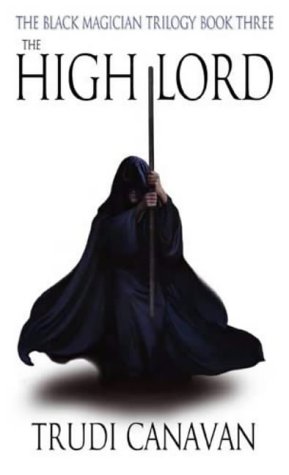
The High Lord by Trudi Canavan

19/08/2011

4
The High Lord by Trudi Canavan is the last in the Black Magician series and is a fitting, bittersweet end to the trilogy. It was believable and enjoyable to read but again left you… wanting, I guess.

The plot picks up a bit of time after Sonea has defeated Regin and her life is now a bit less hectic and more comfortable. The book focuses now on Sonea and Akkarin and their relationship. There’s not a lot I can say with major spoilers so I’ll skip to the end of the book, which is a bit less so. There’s a small magician war and- big surprise- black magic is quite important for even thinking you might win it. It is good to see Akkarin and Sonea working together and we see the similarities in their morals, though the cause is slightly different. I liked (even though I expected it) that black magic was important and that Sonea learnt it in order to save the guild because her actually choosing to learn it required a bit of reasoning and journey and the consequences when she first uses it are also rather enjoyable to read about.

On a side note, we also learn about Akkarin’s past. Because he was such a mysterious figure in the last two books, it’s nice to see and learn about his history. It’s not all in big blast either, though it seems that way. There are hints along the way that there is something else and even when he tells that, I always feel like he’s holding back things that we’ll never be told.

The romance in this book is more believable than in book two, so I don’t have too many complaints. The reluctance of Sonea’s lover is amusing but- we know- in vain. In fact, she was as surprised as he was at who she started crushing on. And there is always a little doubt as to his love that again we can’t really confirm.

I can’t think of anything I didn’t like in the book, but there were parts I thought were useless and pointless to the book that I wouldn’t have written in myself. There was also sometimes a bit too much detail that, though interesting, I glazed over when reading because I was more interested in the story and plot progression.

So, all in all, a nice end. I’ve read better endings (this one seems perhaps a bit abrupt) but it was right for the series, I guess.

Saturday, 29 October 2011

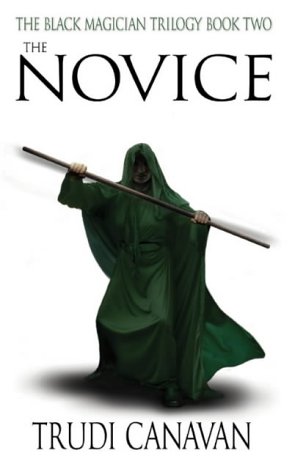
The Novice by Trudi Canavan

19/08/2011
4
The Novice by Trudi Canavan was interesting for me but most readers would say it was boring and nothing happened. And, because I’ve read a lot, I kind of agree.

The majority of this book takes place in the University and we follow Sonea as she begins to really learn magic and the bullying that goes on. As the ‘slum girl’ the other novices mistreat her and bully her. She tends to hold her own (which leads to interesting, yet now well-repeated suspicions about her power) but eventually it gets unbearable for her. Reading this made me genuinely angry, more so than one might expect from such a fantasy book. I hated that the ‘nobles’ did this to her, but understood the need to remind us why we agree with Sonea and perhaps why Sonea needed it in order to stay herself. Thankfully, it isn’t gruesome: just the kind of bullying that wears someone down and all but destroys their character.

There wasn’t a great deal of character development that I noticed or remember besides maturity in Sonea. In this book, it seemed that the focus was on our protagonist reacting to antagonistic secondary characters and the primary antagonist. The two parts I found most enjoyable to read was Dorrien’s visit- and we all knew where that would lead- and the original part when the High Lord stepped in and Sonea’s situation changed. I found it very intriguing to notice the change in her life.

The highlight of the book was, for me, the lessons. Some would hate this but I loved watching Sonea advancing and getting better and actually the lore that some of the lessons delved into. The combat lessons were made to be the most interesting by the fact that they had action and adversity in them. It was also marvellous to see Sonea’s magical strength compared to her fellow novices and also how she occasionally surprised them with an unexpected technique or strategy.

The other part to the story told of Dannyl’s new role of ambassador and we watch him as he learns about ancient magic. The lore side of this is interesting, but also is seeing the other Allied Lands and their customs and people. Tayend, I think, was a nice addition to the novel because I haven’t personally seen as many homosexual characters in books as I’d expect. And he was scholarly, which was nice. Frankly, he was a librarian so I felt little endeared to him merely because he was bookish.

Ultimately, it wasn’t a bad read, and the last scene was great to read. However, even I felt a little let down at the end because I thought something more earth-shaking might have happened at some point in the book: as it happened, they were all relatively unimportant.

Tuesday, 25 October 2011

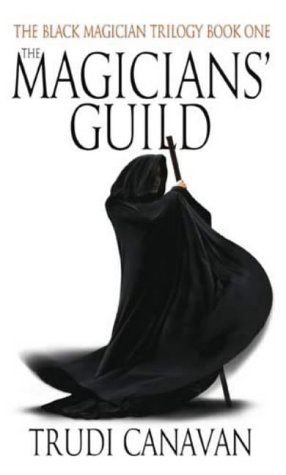
The Magician's Guild by Trudi Canavan

12/07/2011


3.5
The Magician’s Guild by Trudi Canavan, Book 1 in the Dark Magician Trilogy, wasn’t actually a bad read. T­­­he plot and such were all fine (though the writing was occasionally lacking) but didn’t manage to be great.

The premise of the book is solid: girl discovers she can use magic, chase ensues by guild to capture and teach her, a misunderstanding sullies relationships, but everything turns out sort of okay. After reading, I couldn’t say I didn’t like the book, I just felt it wasn’t anything special. As you can guess by my short synopsis, the book follows a generic pattern you could apply to a lot of books, and though this isn’t the same as all them word-for-word, it remains a little flat as though the writer (who I know is popular) has followed set guidelines. The world building is a greater aspect of the book, and I found myself rather interested in the politics of these people and their “traditions”. The only little problem I had with it was how Sonea- our protagonist- started using magic so easily before it all went downhill.

Characters in the book were commendable, if a little black and white. The ‘good guy’ Rothen seemed faultless, while the ‘bad guy’ Fergun was your average slick, petty criminal. I sort of felt that only Sonea was a truly grey character that I couldn’t predict: everyone else was too honourable or had their own loyalties that made them predictable. Maybe I’m getting on as a reader so I’m starting to notice all the signs, but I felt myself making usually correct presumptions about people. However, despite my pouting, there is obvious room for Canavan to expand on these characters because we know they have secrets which could be less than innocent. If so, all the characterisation is fine. Sonea herself actually comments that she’s good at reading people and- with a magic user’s fine senses- perhaps it is unsurprising that we can guess what’ll happen.

The writing was good (third person omniscient, in case you’re interested) but sometimes I completely zoned out when reading something. I’d say this was because the sentence seemed unrelated to the rest of what was happening, but I’m not so sure. I think just running through the story one more time may have alleviated some of this.

The Magician’s Guild is actually quite a good book, if you’re into books about magic and fantasy worlds with a messed up class system. I read it all in one solid sitting and it wasn’t short so I was very much engaged and desperate to see what would happen. In fact, I’m going out to buy the rest of the trilogy before the week is over; it was that good. The mystery set-up- such what exactly the High Lord does and questions about what magic she’ll learn and how she’ll shape the world she lives in- mean that I engage myself with the book when the writing doesn’t do that for me. I’m interested to see how everything will play out and though I have suspicions, I wonder how they’ll actually come into being.

As a huge fantasy and magic fan, I wasn’t disappointed and I’m glad to see good, readable books in this genre being released. There’s a lot of paranormal fantasy coming out recently that’s just not my thing, and a lot of contemporary fantasy I read seems lacking. This book actually gives some hope for better and more things to come.

To cut it a little short, the best way to sum up my feelings for this books is that it is good, just not remarkable. If she’d made a little more engaging (not detached) I might have liked it even more.