Showing posts with label sorcery. Show all posts

Monday, 9 April 2012

A Clash of Kings by George R. R. Martin

Possible spoilers for book one but not this book, but they will be highlighted such that one can avoid them!


4
This book two in Martin's A Song of Ice and Fire series and is an extremely long read (though I hear A Dance With Dragons is longer still). It is continuation of every and all events from book one and is just as hard-hitting and, in some ways, wonderfully deplorable. In my opinion, it is the better of the two since I was much more interested in events than in book one.

The plot in this series, for anyone who hasn't read the books, is a sprawling mess of utter chaos. The best analogy is to imagine a plate of spaghetti, and each string of spaghetti is a plot line and reading it is like trying to find the other end of the spaghetti WITHOUT yanking it out. It is utter madness sometimes. You seem to have your main plot and about 4 other sub-plots, per viewpoint. And then there are around 6 view points. So you have a grand total of around 30 plots which you have to try, in vain to keep straight. Early on in the book, it's even worse. I commend Martin for not just tying off the old plots and moving on, but the start of the book holds onto about half of the plots for about a third of the book, but still insists on bringing in more. What I'm saying is that these are highly confusing books a lot of the time, and sometimes you'd be reading something and only realise about 3 pages in which plot it pertains to.

This same issue is with the characters, though it is less pronounced. The back of the book lists every major and minor character of the major factions on the book, and I seriously believe that every one of them is important in some way. Finishing the book, I astounded myself with how many characters I managed to keep straight in my head. Admittedly, I just had to keep reading blind sometimes and hope this character wasn't too important.

It's a credit to Martin, I have to say, that despite being occasionally muddled I managed to know what was going on. How I think he does it is by defining everything with certain events of names. Practically all the characters have a defining a feature- some are "the Knight of X", they may be named "The [noun]" or they were involved in some conquest- and they will be the only ones associated with this. It's fantastically done when I think about it.

Anyway, down to specifics.

Once again, one of the things is disliked was the wanton brutality of the books, and the banalisation of rape and prostitution. I read some response Martin gave on these fronts (I'm not the only one who is disturbed by it) and he defends it by saying that it is historical and medieval England was like this. He doesn't like it any more than we do, but he has to right a realistic, truthful story. If that means it must be gritty and disturbing, so be it. I can accept that since he's right to be honest in his story, but I'm retaining the right to dislike it. It is too often brought up, in my opinion, and hate that the men are often so flippant about it. It doesn't usually detract from the story, but I think that if anyone has particular sensibilities or particular revulsion to these things, stop while you're ahead; since I expect it to get worse as the book continues and fighting grows. I wonder if I would have ever opted to read these books had I known they were so....so like this.

**** SPOILERS FOR BOOK ONE IN NEXT PARAGRAPHS UNTIL I SAY OTHERWISE!!! ****

I actually got more invested in various stories this time around. Last time, stories such as Jon Snow's, Sansa's or Arya's were just not at all interesting. However, at the end of book one, Arya has fled the castle, Sansa dislikes Joffrey (and, forgive me, has finally gotten some sense) while Jon has learnt that the Night's Watch are to go beyond the wall. In book one, I could read Jon's chapters easily enough for the same reasons I could read Catelyn's and Bran's: because despite not being terribly interesting, they were written and I liked the voice's. Also, they both had points were they were actually interesting. With Jon, I felt his story had so much potential to be interesting, but it just wasn't. I understand they had to train, set up loyalties and what not but there was wasted opportunity, in my opinion. There was always the feeling of a growing threat and it infuriated me that it was never realised story-wise.

Tyrion and Daenerys are both just as good though, if not better. Tyrion is whimsical and despite being a Lannister, I'm actually going to accuse him of having a great deal of sense and even a few morals. In some ways, he often strikes me as the most human of the characters and even though he has his weaknesses and short-comings (no pun intended), he is probably the only Lannister I would want to be King. I think he has the good sense to look past his own life and desires and do what is right for the kingdom as a whole.

Daenerys disappointed me a little since very little happened in her story besides a lot of wandering around, hopeless, and sitting about dreaming about her future. I think she had fewer chapters than last time as well so we didn't see her as much. But the dragons....man, do I love them! I squirm with happiness whenever they do anything and, at one point, it says how she was reclining in cushions with her dragons around her. Bliss, utter bliss.

There are two new views as well: Ser Davos, a Knight of Stannis, and Theon Greyjoy. Davos had a nice voice, and I did like him, but I was more interested in him because Melisandre and the magic (?) she suggested she had.  Theon is more interesting, but only because I hate him from the bottom of my heart. I feel sorry for him since he feels abandoned by his own family, but does he need to be such a debased and detestable individual? He has no value for women or anyone less than himself. In so many ways, he is just like a Lannister in his overwhelming idea of self worth and importance. And the things he does- the way he is- just disgusts me. The bit with Bran and Rickon...I just had to stop reading for a short while. I felt my heart stop; I stopped breathing in shock. I was just blown away at how much I could hate a character.

**** SPOILERS OVER ****


Overall, I was impressed with this book. If you read book one and were a bit dubious, I think this book will set your mind at ease that this is likely to be an enjoyable series and that you should definitely keep reading. I only warn you to expect to be reading this for a while; my copy was around 900 pages.

Sunday, 15 January 2012

The Iron Maiden by Resa Nelson

E-book provided by author.


There will be no explicit spoilers in this review. I may hint at things, and do so in a arguably confusing manner, but I'm avoiding giving away too much information! And anything that does sound like a spoiler, it wouldn't give away anything.


4
This is book two in the series, and is another fantasy adventure following Astrid, a blacksmith, in her new way of life as learns the necessity of what comes with it and finds herself once again traversing in foreign lands.

I definitely enjoyed this book more than number one. I think the first book in a series is never going to be the best because one always has to learn about this new world and meet the characters you'll be spending time with. Though there are some memory-jogging comments in it, there is not a great deal of faffing about trying to tell you the story of book one as quickly as possible. Better yet, book one is important on a few levels- for understanding characters or other (relatively minor) details. There is no necessity for reading book one and it was great in the way that it wasn't just the story from book one reworked- because I did worry that it would be an endless repetition of people hunting for blood-stones.

I liked having new characters as well. I liked the characters, don't get me wrong, but in short books like these, getting character development into the book can feel rushed so often there are few important changes than many gradual ones. I only say that because I wonder that in a series of short books, the speedy changes would be noticeable. Often the changes that are undergone are prominent and completely change a person's outlook, and having one of these every book would get tiresome and dull. Instead we get new characters with there own problems to overcome. I'm not saying it is rushed, just that it's a quick, gradual change (ignore the contradiction). That isn't to say there isn't gradual development though, Astrid, as the protagonist of both books, is slowly growing all the time. Her new walk of life means she must change and she tend to resist this. She loved her life already, and she fears it changing.

Margaret was really amazing for me- and was probably my favourite character in this book. I found her situation engaging, her attitude to it and other things mesmerising and I adored her relationship with Astrid. I get the feeling Astrid is worried about being accepted constantly: she does what she thinks she is supposed to do for her friends and fellow citizens, and her desire to be accepted- not shunned- is underlined by the shape-shifting element. Margaret slowly proves to be much more self-confident and self-assured. She tries to help Astrid be the same, and the language barrier added that interesting dimension to their friendship. I'm interested to see how Astrid acts considering what happened with Margaret.

I liked that there was still no great amount of romance in the book. Astrid has a significant other and though their engagements are... certainly unique, let's say, I can believe their love for one another (though thank goodness they do disagree on some things!) and don't see every encounter a potentially romantic lead.

Though there is one central plot, there are two paths following it; one is Astrid, the other is Norah. I don't want to say much about Norah since I'll enter the dreaded area of spoilers, but I will say I like Norah almost as kind of light relief element. I never believe there is any danger to her and I found myself laughing a few times at her one word responses and the audacity of some of her actions with others. It was pleasant that it wasn't forced.

Besides the most obvious thing when reading though, I think Norah's story was predominantly as a supporting story so Astrid's could remain engaging.

A final element I want to comment on is this New Religion. I really hated those guys- and I mean guys. This religion does not believe women have any value and as a bit of a feminist, this highly annoyed me. What's more, I hated what seemed to be the acceptance of many of the women to every vile whim of these men. Misogyny makes my blood boil and this element gave me something I could hate wholeheartedly, as well as making the book for more mature readers,

Once again, Resa wrote a book I seriously enjoyed and could read easily in a sitting or two at a length of  225 pages (PDF). I wasn't constantly surprised by the book- I do think it's easy to see where things are going- but the details themselves are interesting, and there are other elements to the event that only come to light later on. The Dragons also make an appearance, and who doesn't love dragons? Another really great read that you should rush out and read as soon as you can!


******

Be sure to read my review of book one, and come back on January 24th for the blog tour stop of this book!

Friday, 13 January 2012

The Dragonslayer's Sword by Resa Nelson

E-book provided by author.


4
This a fantasy novel following Astrid, a blacksmith, who lives in a world of dragons and of shape-shifters. Initially involved only in that she made swords for Dragonslayers, she find herself involved in a much greater turn of events in something that began beyond her own memory, and continues way beyond her home.

The first thing that I really like about this book is the plot. When do we have a blacksmith as a protagonist? Never. But why not- they're strong, determined and hard working. They sound made for the role. This kind of quirky uniqueness was a big plus for me because it was so different to your everyday sword and sorcery fantasy. Don't get me wrong, I adore sorcery, but I appreciated this difference in style and outlook. It made the experience that bit sweeter.

The plot itself was very linear. We don't get long travelling monologues or description, which I know makes some people scream for joy, but the first time I got this feeling it jolted me a little. I felt like she'd travelled miles in a matter of words and drew me out just a bit. I imagine if it had been a long drawn out description, I would have complained a little as well, the only difference is that the jolting was painless. It didn't stop me enjoying the book, and the conversations and events in the areas she goes make it easily a fantastic involving story- it rendered the travel commentary unnecessary.

The two main fantasy elements (dragons and shapeshifting) are very quickly introduced in a perhaps merciless manner. But the tone of writing doesn't make you think that this ignorance will last. We're not told everything at once, but neither we left in the dark. We're given what we need to know to get by, and we can learn the rest ourselves. Usually the lore and specifics of both are revealed as time progresses and we get a more rounded view of it, which matches how Astrid learns.

The shapeshifting is a self-perception idea. Astrid can make herself appear as she sees herself or wishes herself to be; equally she could change someone else's appearance. I loved this embodiment of the idea that we are who we want to be, and others shouldn't change us (in the book it's considered bad manners to change another's appearance). Everything we encounter and see is how we choose to see it, which is the foundation of prejudice. Calling something beautiful or ugly is a mix of feelings and pre-conceptions. The shapeshifting takes this is step further to say that this power, this belief, can have an actual affect on people. A strong man may become weak merely because someone sees them as weak and (intentionally or not) compels this view onto the man's shape. I just really like the idea as well that if you are self-confident, or happy with who you are, then no one can change you at all.

I'm not going to lie that I was a bit dubious about the last part of the story, not the actual last chapter/conclusion. It felt like a rather separate story to the original plot, and I didn't expect it to continue as it did. It wasn't bad in itself, but I wonder whether it should have went there or what not. Also, as with the travelling, bits occasionally felt rushed over; as though it was necessary as part of the plot, but nothing else. It just had to happen.

Otherwise, this is really great fantasy. It's a short book at 286 pages long, but it keeps one riveted such that it could be comfortably finished in an afternoon. It's something I'd recommend to a fantasy reader because it's a pleasant and different read. I don't feel like I had to try hard: I could just enjoy reading it.

******

Be sure to read my review of the sequel in the next few days, and come back on January 24th for the blog tour stop of book two, The Iron Maiden.

Tuesday, 20 December 2011

Top Ten Books I Hope Santa Brings


  1. Song of Ice and Fire by George R. R. Martin I've read book one and I just couldn't bear the cliffhanger. I've asked for the rest of the books, but I'd be happy with just the next book to satisfy my curiosity. I mean, some reviews are saying they aren't good books.
  2. The Book Thief by Marcus Zusak is one I've heard basically raving about anywhere and everywhere. I'll be proud to know contribute in such conversation since I'll have read it.
  3. The Name of the Wind by Patrick Rothfuss Another one I've had recommended a couple of times that I'm finally getting around to getting. 
  4. Legend by Marie Lu Since I heard about it a while ago, went to buy it and... it wasn't out yet. So this is the realisation of a book I've been waiting to have for a much too long time.
  5. The Girl of Fire and Thorns by Rae Carson To add to my pile of fantasy, I have another book which has mostly received good reviews and criticism (at least where I've looked) and I find the concept interesting and unique enough that I couldn't, in good conscience, pass this by.
  6. A Clockwork Orange by Anthony Burgess Since my...inauguration in liking dystopia, this one has come up a few times. I haven't read it or seen the film, but again the positive feed back has me thinking I'll both like and be mildly disgusted by this book.
  7. Jane Eyre by Charlotte Brontë I'm trying my best to read classics, and this is another one that I feel I'll have to read. I've heard that with Pride and Prejudice and Wuthering Heights, these make quite the set. I'll be glad to have read them all.
  8. Anna Dressed in Blood by Kendare Blake Enough people have said this is weird in a good way that I feel I want to know how this book happens. The title puts me off a bit (I have a huge aversion to blood), but I've been mildly assured I shouldn't worry.
  9. Dead Tossed Waves by Carrie Ryan I read the first book in this series earlier in the year and, bleak and depressing as it was, it was riveting and realistic. I won't be reading this too soon after Christmas (it is supposed to be joyous, after all) but I want to read it soon-ish, before I forget book 1.
  10. Assassin's Apprentice by Robin Hobb The final one is another fantasy one that I want to read. Seriously, I could spending the next three months on fantasy exclusively and still have some left. I think I'm making things hard for myself since I'm starting all these series that have the potential to depress me and consume me at exam time, but they've all come well recommended so I shan't shy away just yet.
Thanks for hopping by. Maybe you could tell me one book; because if we all write lists of ten down there, it just gets cluttered. And, if I agree with the one you do choose, I can feel confident to hop on over to you.

Anyway, Happy Hopping!

Oh: Merry Christmas and A Happy New Year too (if you're just the casual hopper)!!!!

Thursday, 8 December 2011

The Night Circus by Erin Morgenstern

The Night Circus5
A highly engaging and slightly confusing book that follows a circus in which two magicians are involved in a competition neither really understands. This has to be one of my favourite books this year. It's been a while since I've read a new fantasy book (part of a series or otherwise) that has kicked in my obsessive-reader streak. I just could not pull myself away.

First off, the circus is amazing. I've only been to a few circuses in my life, but they don't even compare to the Le Cirque des Rêves (Circus of Dreams) and I wonder if I've ever enjoy a circus after being transported to this one. Reading about it is immersive in a way I can't describe. I could smell the caramel, see every performance and every performer, feel the energy of the crowd. I can't remember being so transported by a book, and for that alone I would give it five stars. Interspersed with the actual plot, we are told about the experiences in various tents and the things we see. It helps to break from the plot and make the character transitions seem smoother.

But then we have the actual story. As I said, it two magicians in a kind-of contest (all is revealed later on in the book) and the circus is the venue for this. So everything in the circus is the spawn of their imagination, their dreams. Every tent, in its own way, implies something about the maker, hints at the plot and present feelings. I'm reading into it, I admit, but it seems all so cleverly interwoven, much like the circus itself.

Yet I think the characters are what make it interesting. We have our magicians, Marco and Celia. They are designed to opposites (that's why they were chosen as the competitors) so they match, even compliment, each other perfectly. It means we get two distinct voices and views, and two ways of seeing the same world. And their magic is wrought in different ways. Hers physical, his with charms and symbols; he is more considering, she more impulsive. It amazing. We also have Bailey, who story we jump into, as well as characters like Mr. Barris, Poppet and Widget, Tsukiko, Chandress, Prospero (Hector), Mr. Alexander, The Burgess Sisters, Friedrick Thiessen, Isobel and others I've likely forgotten. They make the book amazing, and each one is distinct in my mind and has their own story. I can't express how pleasant it is to read so many connected characters but not once become confused.

The Circus itself becomes almost a character too. Almost. I'm always aware it's a circus, but it has personality and is so well loved and talked about as though alive that one cannot help but consider it a character also.

Their is also romance in the book. It becomes integral, but the book does not become a complete romance, which I appreciated. It was fantasy and stuck to that like glue to paper. Certain events pre-empted this, and I think anyone could have guessed this would happen a quarter of the way into the book when Marco first sees Celia. And guess what? No love triangles! Huzzah! (You could argue otherwise, but I disagree. I never believed that romance.) It was much more interesting to see them interacting with each other and facing problems in their own relationship.

It's also set in the late 1800s, early 1900s. On one hand this was great for the lack of technology, the clothes, the atmosphere, and the people themselves. It's also handy since it meant it wasn't based at a time when there were huge events happening in history. There were events, but none so far reaching they could affect the story or have the characters being split. This story isn't about conflict, I feel. It seems odd since it's a competition, but I think it was more about working together than against each other.

I'm going to say something bad because I have to, but this didn't really bother me: I found some of the explanations hard to follow. Sometimes they were just concerning magic and its mechanics, but I expected to understand more than I did. I had to just move past it, but I didn't expect to understand. Part of the magic (pardon the pun) of this book was that we didn't know everything. The mystery was alluring, and the discovery sweeter for it; regardless of the comprehension. That's why I wasn't bothered by the mystery around the contest. This books hinges on not knowing anything, and we are made to get used to this idea very early on.

The novel is a treasure of a book and of a story. Never would I dare part with it. And it's wondrous element is well suited to the Christmas season. Buy this for yourself for Christmas. By it for anyone who loves fantasy, or someone who's faith in romance in a book is fading. My adoration for this book cannot be put into words; I am a rêveur through-and-through. Buy it, love it, but don't thank me.

I think this has earned the highly acclaimed spot as My Favourite Book of the Year.


After publishing/writing this, I've found a site for people interested in the books to kind of experience and live the books again. It's okay, but slow-going; many people would hate it. Link.

Tuesday, 1 November 2011

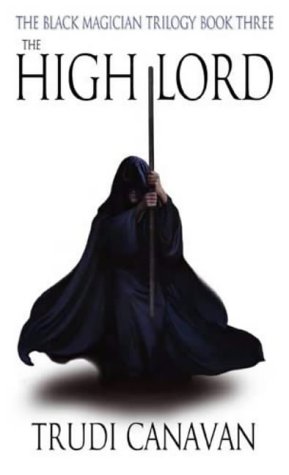
The High Lord by Trudi Canavan

19/08/2011

4
The High Lord by Trudi Canavan is the last in the Black Magician series and is a fitting, bittersweet end to the trilogy. It was believable and enjoyable to read but again left you… wanting, I guess.

The plot picks up a bit of time after Sonea has defeated Regin and her life is now a bit less hectic and more comfortable. The book focuses now on Sonea and Akkarin and their relationship. There’s not a lot I can say with major spoilers so I’ll skip to the end of the book, which is a bit less so. There’s a small magician war and- big surprise- black magic is quite important for even thinking you might win it. It is good to see Akkarin and Sonea working together and we see the similarities in their morals, though the cause is slightly different. I liked (even though I expected it) that black magic was important and that Sonea learnt it in order to save the guild because her actually choosing to learn it required a bit of reasoning and journey and the consequences when she first uses it are also rather enjoyable to read about.

On a side note, we also learn about Akkarin’s past. Because he was such a mysterious figure in the last two books, it’s nice to see and learn about his history. It’s not all in big blast either, though it seems that way. There are hints along the way that there is something else and even when he tells that, I always feel like he’s holding back things that we’ll never be told.

The romance in this book is more believable than in book two, so I don’t have too many complaints. The reluctance of Sonea’s lover is amusing but- we know- in vain. In fact, she was as surprised as he was at who she started crushing on. And there is always a little doubt as to his love that again we can’t really confirm.

I can’t think of anything I didn’t like in the book, but there were parts I thought were useless and pointless to the book that I wouldn’t have written in myself. There was also sometimes a bit too much detail that, though interesting, I glazed over when reading because I was more interested in the story and plot progression.

So, all in all, a nice end. I’ve read better endings (this one seems perhaps a bit abrupt) but it was right for the series, I guess.

Saturday, 29 October 2011

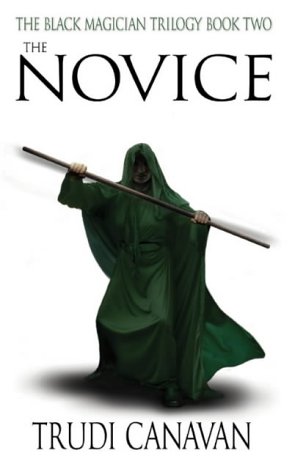
The Novice by Trudi Canavan

19/08/2011
4
The Novice by Trudi Canavan was interesting for me but most readers would say it was boring and nothing happened. And, because I’ve read a lot, I kind of agree.

The majority of this book takes place in the University and we follow Sonea as she begins to really learn magic and the bullying that goes on. As the ‘slum girl’ the other novices mistreat her and bully her. She tends to hold her own (which leads to interesting, yet now well-repeated suspicions about her power) but eventually it gets unbearable for her. Reading this made me genuinely angry, more so than one might expect from such a fantasy book. I hated that the ‘nobles’ did this to her, but understood the need to remind us why we agree with Sonea and perhaps why Sonea needed it in order to stay herself. Thankfully, it isn’t gruesome: just the kind of bullying that wears someone down and all but destroys their character.

There wasn’t a great deal of character development that I noticed or remember besides maturity in Sonea. In this book, it seemed that the focus was on our protagonist reacting to antagonistic secondary characters and the primary antagonist. The two parts I found most enjoyable to read was Dorrien’s visit- and we all knew where that would lead- and the original part when the High Lord stepped in and Sonea’s situation changed. I found it very intriguing to notice the change in her life.

The highlight of the book was, for me, the lessons. Some would hate this but I loved watching Sonea advancing and getting better and actually the lore that some of the lessons delved into. The combat lessons were made to be the most interesting by the fact that they had action and adversity in them. It was also marvellous to see Sonea’s magical strength compared to her fellow novices and also how she occasionally surprised them with an unexpected technique or strategy.

The other part to the story told of Dannyl’s new role of ambassador and we watch him as he learns about ancient magic. The lore side of this is interesting, but also is seeing the other Allied Lands and their customs and people. Tayend, I think, was a nice addition to the novel because I haven’t personally seen as many homosexual characters in books as I’d expect. And he was scholarly, which was nice. Frankly, he was a librarian so I felt little endeared to him merely because he was bookish.

Ultimately, it wasn’t a bad read, and the last scene was great to read. However, even I felt a little let down at the end because I thought something more earth-shaking might have happened at some point in the book: as it happened, they were all relatively unimportant.

Tuesday, 25 October 2011

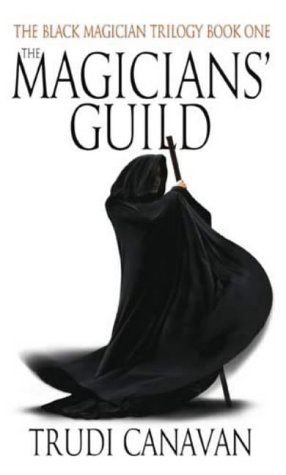
The Magician's Guild by Trudi Canavan

12/07/2011


3.5
The Magician’s Guild by Trudi Canavan, Book 1 in the Dark Magician Trilogy, wasn’t actually a bad read. T­­­he plot and such were all fine (though the writing was occasionally lacking) but didn’t manage to be great.

The premise of the book is solid: girl discovers she can use magic, chase ensues by guild to capture and teach her, a misunderstanding sullies relationships, but everything turns out sort of okay. After reading, I couldn’t say I didn’t like the book, I just felt it wasn’t anything special. As you can guess by my short synopsis, the book follows a generic pattern you could apply to a lot of books, and though this isn’t the same as all them word-for-word, it remains a little flat as though the writer (who I know is popular) has followed set guidelines. The world building is a greater aspect of the book, and I found myself rather interested in the politics of these people and their “traditions”. The only little problem I had with it was how Sonea- our protagonist- started using magic so easily before it all went downhill.

Characters in the book were commendable, if a little black and white. The ‘good guy’ Rothen seemed faultless, while the ‘bad guy’ Fergun was your average slick, petty criminal. I sort of felt that only Sonea was a truly grey character that I couldn’t predict: everyone else was too honourable or had their own loyalties that made them predictable. Maybe I’m getting on as a reader so I’m starting to notice all the signs, but I felt myself making usually correct presumptions about people. However, despite my pouting, there is obvious room for Canavan to expand on these characters because we know they have secrets which could be less than innocent. If so, all the characterisation is fine. Sonea herself actually comments that she’s good at reading people and- with a magic user’s fine senses- perhaps it is unsurprising that we can guess what’ll happen.

The writing was good (third person omniscient, in case you’re interested) but sometimes I completely zoned out when reading something. I’d say this was because the sentence seemed unrelated to the rest of what was happening, but I’m not so sure. I think just running through the story one more time may have alleviated some of this.

The Magician’s Guild is actually quite a good book, if you’re into books about magic and fantasy worlds with a messed up class system. I read it all in one solid sitting and it wasn’t short so I was very much engaged and desperate to see what would happen. In fact, I’m going out to buy the rest of the trilogy before the week is over; it was that good. The mystery set-up- such what exactly the High Lord does and questions about what magic she’ll learn and how she’ll shape the world she lives in- mean that I engage myself with the book when the writing doesn’t do that for me. I’m interested to see how everything will play out and though I have suspicions, I wonder how they’ll actually come into being.

As a huge fantasy and magic fan, I wasn’t disappointed and I’m glad to see good, readable books in this genre being released. There’s a lot of paranormal fantasy coming out recently that’s just not my thing, and a lot of contemporary fantasy I read seems lacking. This book actually gives some hope for better and more things to come.

To cut it a little short, the best way to sum up my feelings for this books is that it is good, just not remarkable. If she’d made a little more engaging (not detached) I might have liked it even more.

Friday, 23 September 2011

The Fellowship of the Ring by J. R. R. Tolkien

4.5
The Fellowship of the Ring by J. R. R. Tolkien is considered to be the epitome of epic fantasy by many people, and though it is not for me, I understand where everyone comes from. The book, as most know, follows nine mortals on a journey to destroy the one ring. It superbly written and an excellent story, and I'm annoyed that I avoided it for so long (I didn't want to be disappointed!)

The plot of the story is very linear. Yes the party stops from time to time for various reasons, but ultimately there is very little side tracking that I don't expect to be later involved in the story. Well, almost. I felt that Tolkien went into history a bit too much at some points and I completely glazed over reading about these details. I don't think you'd really see that nowadays since everything should be important, but I think I remember something saying that he wanted to write it as a work of fiction, but like a factual account of something. This in mind, I can forgive his wanderings into lore.

I'd seen the film many times before reading, so I didn't struggle following the story. The problem I had was that the company of people seemed to have less dynamic and chemistry between them. I thought of them as a hobbits and their protectors and no more than that; the film presents it otherwise. I kind of preferred the camaraderie of the film, but the description (and the fact that was the rue version) meant I did prefer the book.

I felt the characters were not overly important in this book. Sure, they were clearly themselves and enjoyable to read about, but they felt a bit flat to read and I didn't get a feel for them. And there was hardly any proper conversations between them. It was mostly should we do this or that. And Gandalf proclaiming the wonder of Hobbits- give me a break! I think I am biased though. The films were more about the characters than teh book, maybe because they had access to all teh material with which they could move about and give a more gradual development of relationships. This is something I hope improves.

One of the things I did really like was the songs and poems interwoven with the story because I couldn't resit chanting or singing (quietly) to myself as I read. I had one poem ear marked as my favourite (Bilbo's one to Frodo in his rooms) because it had the best rhythm and feel to it. I'm not a big poetry person, so I'm surprised I liked this element. And while I'm on the topic, I have to say that I love how Bilbo played a much larger part in the book than he did in the film which is definite improvement: Bilbo is quick, whimsical character that I think makes me smile.

I also really liked Tom Bombadil, who didn't appear in the films (this now annoys me). I mean, I really, really liked him. He was my favourite character because he was so weird and unpredictable. I would read a book on him without question because I found his remarks and remarks made of him so hinting a greater, longer life than we are given and his character is odd that we wonder if he's always been like that.

I'm glad I finally read this after many years of worry on my part and urgings on everyone else's. I was impressed with the book, and look forward the the sequel, prequels and companions. I've started down a long road that I hope to walk many times, one might say. And Gandalf used magic (with magic words too!) which wasn't really in the film I felt. It was there, sure, but it wasn't so obvious that I could know it was there. As a real lover of magic and those necessities of epic fantasy, I was glad to see the books seemed to stick to this better.

Friday, 2 September 2011

A Game of Thrones by George R.R. Martin


3.5
Game of Thrones by George R. R. Martin is the start of an epic fantasy series in five parts. In general, I liked it since I’m fond of fantasy and specifically epic fantasy, but some of the book seemed slow to me. My main reason for reading it was the hype around it, and I hadn’t read epic fantasy for a time.

Though the start definitely drew me in with the mystery surrounding it, I overall felt that the description at the start put me off merely because the breaks from it were short, uninteresting or confusing. The things mentioned became clear, but I was lost a bit at first. The first time I really started to get glued into the book was when King Robert arrived since I found him so interesting.

As always with epic fantasy, the amount of characters is overwhelming at the start and you feel the strain of trying to remember them all my copy of the book actually had a helpful family list thing in the back, but I preferred to just figure it out as went along since flicking perpetually to the end of the book wasn’t how I wanted to spend my time. Mostly though, it got better quickly. The characters in this book were many in number, but they were each unique and interesting to read about with conflicting motives and eventful pasts. The voice was fine too: it sounded primarily like a narrator, but I think each character section had a particular feel to the way of writing which also made them distinctive.

One thing that did annoy was the way some things were said, and even said repeatedly. I understand that it is meant to be set, perhaps, in some ancient land, but needn’t keep saying “break the fact”, “man grown” or “as it please the Gods”. As a bit of pedant and grammar orientated person, this just grated on my nerves and distracted from what was going on. I doubt critics would have minded him saying “breakfast” instead.

I was pleasantly surprised with how much was in this book: I think it could easily have been made into a trilogy (the one book) and I couldn’t just how many events could be concluded only to be quickly replaced then concluded in the same book. It shocked me but, at one point, the so-called intrigue began to betray its namesake (I’m even sounding like them now…) and dragged just a teeny-weeny bit.

Even though it was the first book, the lack of sorcery or any sort of real mythic quality annoyed me. There were no dragons, sorcery, elves, Divine intervention or anything until towards the end of the book so I felt annoyed that I had had to wait so long for it, then I lose it all too quickly. It’s good marketing I guess, but I’d rather it was a satisfying read. The ending though… I loved the ending like you can’t imagine!

There are a lot of stories, told mainly from the view points of the Starks, who are Lords of Winterfell, Tyrion Lannister, a witty, mouthy dwarf, and Daenerys, the last of the old line of Kings who had dragons to do their will. Tyrion is the first viewpoint to get interesting, merely because he is an amusing character to be around, and his comments and insight make the read all the more engrossing. The Starks hold their own but have few chapters when it felt like an info dump and I probably glazed over a bit. That, and the name Bran made me think Bran Flakes every times. But my heart lies with Daenerys.

Admittedly, I found her story unreadable to start because of its brutality, but my heart went out to her (if a bit dubiously). She never fought back, which annoyed me, but she tried to explain why. Eventually though, as the story went on and she seemed to fall in love, it became much more intriguing and more like the fantasy I was hoping for. As it happens, I can thank her for that wonderful ending I mentioned. But those eggs, damn it. The expectation of them annoyed me.

I think that the book did lag a bit towards the end, but I ultimately enjoyed the book because rather than maintaining the boredom, it picked up again. So except for maybe 100 pages, this 805 page book is well worth a read and I hope that the sequels are too, though I won’t be getting them just yet.