Wednesday, 5 October 2011

The Help by Kathryn Stockett

5
The Help is the startling yet wonderful tale of black maids in 1960s Mississippi as they write a book to show exactly what they are subject to daily from white employers. It is told by two maids, Minny and Abileen, and one white woman, Skeeter, who hides her passion for Civil Rights. You could argue that this is therefore a biased book, but other people in the story portray the racist nature of many at the time. Yet it needn’t: racism is topic of a one-sided nature anyway.

The way the story is written by the maids is supposed to be in the manner of how they spoke; such as “I done raised” or “Taking care a white babies”. Personally, I struggled with this in the beginning but, persevering, I got used to eat and (if this doesn’t seem cheesy) recognised the kind of rhythm of the speech. By the end, I was charmed by it and even slipping into it myself form speaking verbally.

Being a story about racism, the prime element of the narrative is interaction between people, and how these reactions differ. For example, the way Abileen originally acts towards Skeeter and how Minny is around her highlights the oddity of their arrangement. One line I liked, from Abileen I think, was that these were lines in their heads that they had to erase because they had led themselves to believe them. I liked the fact that every time this trio broke down a barrier between themselves, an unrelated event would always occur to contrast it to show just how racism wasn’t dead and that there were others still believing their prejudiced beliefs and symbolising the challenge they faced. Perhaps even the challenge they have overcome.

I personally felt that Abileen was the main character though because, important as Skeeter is, the book could never have been written without Abileen since she has a hand in everything. Her commitment and sorrow lead her to believe in and champion their book.

Her child-rearing is just adorable to watch as well. Mae Mobley (to me suggesting a bubbly child) asks the kind of question that the white people never asked their maids. This is one of Abileen’s lines. Yet Abileen answers them and more in seeking to help this child. Her stories for Mae Mobley made me smile and they highlight the main issues and items of the civil rights movement: such as the Martian, Dr. Martin Luther King Jr. or the story of two girls- one black, one white- deciding they must be the same because they have the same limbs. Yet the aspect of her telling Mae suggests where she saw the source of the problem: racist parents brought up their children to be the same. Abileen willingly risks her job for this because she cannot stand by and watch another loveable child, who she loves so dearly, become corrupted and begin treating her like dirt.

On a side note though, I did love Minny. She was SO funny and incredibly correct in her roundabout way. She is led by her own sense of morality and justice, though this costs her jobs since she cannot help but to speak up. Celia Foote only made Minny the better and more interesting because we could see how she herself was so indoctrinated by the racism, by the lines and unspoken rules, that she finds pleasant Mrs. Foote absurd.

The book is comedy-drama (apparently) and until I read it, I never would have believed a book could work with the subject matter. But Kathryn is witty and writes like a comedian writing a sketch sometimes. And though it is fiction, it has roots in fact: the writer confesses how she lived in Mississippi, had a black maid and thought nothing was wrong until she grew up. The section at the back where she explains this and talks about her Help makes clear some of her inspiration for Abileen and Minny.

I have only touched on what I like about this book: there is the ending, certain events, the other maids’ stories and a sprinkling of romance that only add to the book. I cannot believe that anyone could wish other than to read this because it is so easy to be drawn into it. It demonstrates that despite the way it appeared, most of America was very much ready for the move away from racism.

Do not miss this.

And by the way, I cannot wait to see the film here in the UK, and I’ve also heard the audio book is superb.

Tuesday, 4 October 2011

City of Ships by Mary Hoffman

17/06/2011


2
City of Ships by Mary Hoffman is the fifth instalment in her Stravaganza series. It’s a series of books about students aged 16 and up who can travel- via talismans- to a parallel universe not unlike fourteenth century Italy.

The books all seem to follow a general pattern of a surprise visit to Talia (the parallel universe), disorientation, finding ones place in Talia, life improves back home, calm, problem in real world affecting parallel one, fix problem, main problem in Talia (usually fantasy violence), solved indirectly by protagonist, everyone’s happy. That may seem lengthy, but to my memory they have all genuinely followed that pattern without much notable deviation.

That isn’t to say they are bad books though: they are interesting and not taxing to read. They don’t strike me as international best seller material, but that’s only my view and in my taste; I believe in actual fact that most people would enjoy them.

They are young adult books and it is pleasant to see that besides a few necessary clichés, they are mostly true to reality. It’s like a breath of fresh air. They don’t speak with slang every other sentence and they are typically normal (if a little middle class). I rather enjoyed this book in that I think it branched out a little. It used elements from previous novels that had been mostly untouched when they were moderately important and brought them to light. It also spoke about rape which I don’t recall in other books: or any such heinous crimes. Then again, it’s been a long time since I read them.

But these new things being brought in may also be the beginning of the end. I’ve read and watched enough of the fictional media to know that when something new is brought in, it can occasionally feel like a grasping of straws. In the interest of making the novel sell and be interesting, the author introduces a new dimension to the novel that hopes to ‘shake things up’ and keep consumers buying. I don’t think the new information is too much like that- it’s all necessary at the moment. But if the next book is not a finale, I think I am right about this.

There is little else to say about this book: it is well researched and the characters are fairly relatable. Some hicks such as when the narrator uses a colloquial phrase unlike the usual objectivity and sometimes the characters are written for a younger audience which tends to make me feel alienated: like Hoffman has forgotten who she’s writing for.

I wouldn’t urge anyone to go out and buy the book now, but it is worth loaning from the library for interested parties. Just loan the first in the series: City of Masks.

Saturday, 1 October 2011

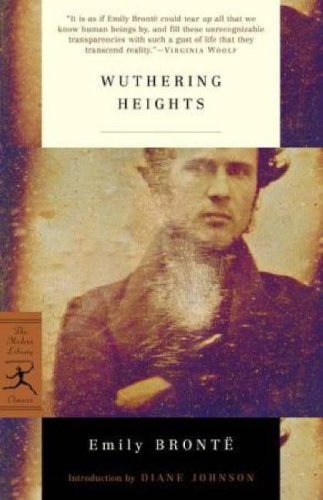
Wuthering Heights by Emily Brontë

15/06/2011


4
Wuthering Heights is a romance novel like no other.

As clichéd as it sounds, that’s the honest to God truth. I finished the book and didn’t know what to feel or how to respond. It was such an odd book and I’m still asking myself questions and processing what happened.

The characters are excellent, as any reader would probably tell you. Heathcliff is twisted, cruel and diabolical- but completely understandable. His motives are clear and he follows them through; even near the end when he… changes, he is still getting what he wants- just in an unplanned way. At least that’s how I interpreted it.

Yet, as I said at the start, it is obviously a romance novel and relationships begin early on in the narrative. In the introduction of my book, I was informed of such a thing and I could see it because I was looking for it. I think this reiterates how one should read prefaces and all the stuff some people skip at the start of the book. It’s there for a reason people. Romance is also portrayed in every which way you could think of: sincere, debased, passionate, considerate, contented and foremost as unwavering. Though the love (or lack thereof) is present throughout, the lovers all seem to remain adamant about their feelings. Yes there will be disagreements and the like, but the lovers will leave feeling the same about each other. It is when affection changes that the course of the novel changes and in this way, the book is utterly propelled by love.

Of course, I must mention the fact that most consider this book so fine. It is said to unabashedly show an outlook on human nature transcendent of her time. What would have repulsed many contemporaries is what fascinates the modern reader. The contrast between every character to another, of each place to another, demonstrates the finely wrought story of Brontë were everything has its own opposite counterpart.

I don’t think I truly appreciate the novel yet. The plot was superb (with a typical Victorian climax, I thought) and I said the characters were good. But they are surface story- nothing in depth or more personal. Admittedly I touched on some ideas, but they are only a general interpretation of a broad feeling; there is something below the surface that I just haven’t reached.

I know I’ll have to read it again. 

Wednesday, 28 September 2011

An apology

At the moment, I have just returned to school. It's my twelfth year in British Education and is a big jump from last year in terms of work and the commitment you have to have to get things done. Add onto this GCSE Classics and weekly theatre trips (evenings) I am struggling to work my way through books. In order to compensate for this, for as long as they last I will have reviews scheduled to post twice a week, Tuesdays and Saturdays, that I wrote before starting a blog.

I only have about 10, but it will get some more material of mine out there and hopefully give you an idea of the books I read, what I think of books, and whether or not you like me.

Also, as a warning, this includes my first reviews and you will probably notice certain oddities in them that are unusual or clumsy. Feel free to point them out, because despite being old, they're not that old and everyone can do with some self improvement.

P.S. I might drop in from time to time for hops (since they are answering question that take seconds to read rather than entire books) or anything else I think important. I may, but don't count on it, even try to write something about my opinion on banned books but, I have to say, there are enough of them and I agree with so many it's unbelievable.

Friday, 23 September 2011

The Fellowship of the Ring by J. R. R. Tolkien

4.5
The Fellowship of the Ring by J. R. R. Tolkien is considered to be the epitome of epic fantasy by many people, and though it is not for me, I understand where everyone comes from. The book, as most know, follows nine mortals on a journey to destroy the one ring. It superbly written and an excellent story, and I'm annoyed that I avoided it for so long (I didn't want to be disappointed!)

The plot of the story is very linear. Yes the party stops from time to time for various reasons, but ultimately there is very little side tracking that I don't expect to be later involved in the story. Well, almost. I felt that Tolkien went into history a bit too much at some points and I completely glazed over reading about these details. I don't think you'd really see that nowadays since everything should be important, but I think I remember something saying that he wanted to write it as a work of fiction, but like a factual account of something. This in mind, I can forgive his wanderings into lore.

I'd seen the film many times before reading, so I didn't struggle following the story. The problem I had was that the company of people seemed to have less dynamic and chemistry between them. I thought of them as a hobbits and their protectors and no more than that; the film presents it otherwise. I kind of preferred the camaraderie of the film, but the description (and the fact that was the rue version) meant I did prefer the book.

I felt the characters were not overly important in this book. Sure, they were clearly themselves and enjoyable to read about, but they felt a bit flat to read and I didn't get a feel for them. And there was hardly any proper conversations between them. It was mostly should we do this or that. And Gandalf proclaiming the wonder of Hobbits- give me a break! I think I am biased though. The films were more about the characters than teh book, maybe because they had access to all teh material with which they could move about and give a more gradual development of relationships. This is something I hope improves.

One of the things I did really like was the songs and poems interwoven with the story because I couldn't resit chanting or singing (quietly) to myself as I read. I had one poem ear marked as my favourite (Bilbo's one to Frodo in his rooms) because it had the best rhythm and feel to it. I'm not a big poetry person, so I'm surprised I liked this element. And while I'm on the topic, I have to say that I love how Bilbo played a much larger part in the book than he did in the film which is definite improvement: Bilbo is quick, whimsical character that I think makes me smile.

I also really liked Tom Bombadil, who didn't appear in the films (this now annoys me). I mean, I really, really liked him. He was my favourite character because he was so weird and unpredictable. I would read a book on him without question because I found his remarks and remarks made of him so hinting a greater, longer life than we are given and his character is odd that we wonder if he's always been like that.

I'm glad I finally read this after many years of worry on my part and urgings on everyone else's. I was impressed with the book, and look forward the the sequel, prequels and companions. I've started down a long road that I hope to walk many times, one might say. And Gandalf used magic (with magic words too!) which wasn't really in the film I felt. It was there, sure, but it wasn't so obvious that I could know it was there. As a real lover of magic and those necessities of epic fantasy, I was glad to see the books seemed to stick to this better.