Saturday, 8 October 2011

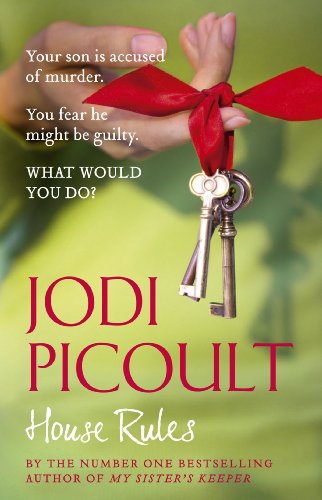
House Rules by Jodi Picoult

21/06/2011

3
House Rules by Jodi Picoult is a basic fiction novel in my eyes. It takes an interesting concept and writes a story about it. With all due respect, it is very simple and straightforward as a book. Not that it was bad, of course.

It’s an interesting story about a young adult with Asperger’s syndrome (AS) and is accused of a murder. It is apparently a much dramatised book: no AS sufferer is ever that affected and socially inept. He has been said to be the highest degree of every possible AS. I can understand why she may have done this, to educate and increase drama, but it annoyed a lot of people who labelled the books unrealistic.

The book is engaging and though it’s not un-put-down-able, you do have it on your mind. Picoult is an excellent writer and you get absorbed utterly in the story. At one point, I even had to stop reading because I felt too emphatic with Jacob, the protagonist with AS, and it was tearing me apart to read it. A credit to her skill, do not doubt that.

It is told in the way of multiple narrators- Jacob with AS; his mother, Emma; his brother, Theo; their lawyer, Oliver; and the police investigator, Rich. It is a slightly ruined family but fairly understandable and a real portrayal of how a family would be in this scenario. There are also typical elements of romance, a tad of action and mystery. I mean, who actually committed the murder?

The plot was well thought out, and the clues were drip fed so that we were guessing and making conclusions as the story went on. And then, at the end, the final realisation of what happened in the murder added a final but nonetheless foreshadowed twist.

Like I said, it is typical albeit good.

Friday, 7 October 2011

Friday Hop Quatre


This week, we aren’t answering a question. We are spotlighting our fellow bloggers. Find your favorite(s) author interview(s), guest post(s), book review(s), or bookish article(s) that ANOTHER BOOK BLOGGER featured on their site recently and tell us why you love it/them! As an additional challenge, find your favorite one of EACH of the categories above and spotlight all 4 (interview, guest post, review, article). (Here)

Argh! I hate things like this. I'm going to have to break the rules a bit because I can't comfortably say what I are my favourite reviews and all that. I have preferred reviewers i.e. Tiger at All Consuming Books, Karen at For What It's Worth, Kathy at  I am a Reader not a Writer, Adam at RoofBeamReader, Hannah at Once Upon A Time. But they only encompass the ones I read everything by (and I mean that)! If you look at every blog I follow (here), I swear to you I read all of them at least once a week because they post interesting things. I forgot Allie at Literary Odyssey. See. That's how bad it is. I'm at a point where I try to read so many it is hard not to forget some. And they are only the book bloggers. I love author blogs and general comment/thought blogs too.

Life is hard as a blog reader.


Q. If you could pick one character in a book, movie or television show to swap places with, who would it be?


I think I'd like to swap with Garion (Belgarion) in the Belgariad since they are my favourite books. And I'd like the cool powers. And the amazing sword. Oh- and that other thing I can't say since it is a HUGE spoiler (that you'd guess if you read it anyway). I kind of agree with most people on the hop.

I mean: who wouldn't want to travel with the the Doctor in the TARDIS? To go to Hogwarts? To shapeshift and all that in paranormal? To get super powers in general fantasy? To see dragons in High Fantasy? To truly see what life is like in a dystopian society? Reading is mainly about escapism for me, so I tend to want dive into my books and try out every character.


 To-Be-Read's: How big is your pile? Which book keeps getting pushed down the stack, but you keep meaning to read it?

My physical pile of books is only about twenty or so, but I'm convinced that I must have some around that I haven't read and will curse myself for forgetting soon enough. I think I'm quite good at reading my books since I try to read YA, then Classic, then Contempory, then Other. It doesn't happen (ever) but I at least have it in mind of what I read last. I'll never read the same genre in a row, for example. 

In terms of my list of books that I want to buy and read... I could be here all night. It is somewhere in the hundreds. This is because, let's face it, as a reader, all I want to do is read and read and read some more. I never want to stop reading, so even if it's a genre I don't particularly like, I will read it because I know I'll enjoy being drawn into the story though I might be dubious about the contest.

Friday hop, over. 


Everyone enjoy their weekend now and try to not read too much!

Wednesday, 5 October 2011

The Help by Kathryn Stockett

5
The Help is the startling yet wonderful tale of black maids in 1960s Mississippi as they write a book to show exactly what they are subject to daily from white employers. It is told by two maids, Minny and Abileen, and one white woman, Skeeter, who hides her passion for Civil Rights. You could argue that this is therefore a biased book, but other people in the story portray the racist nature of many at the time. Yet it needn’t: racism is topic of a one-sided nature anyway.

The way the story is written by the maids is supposed to be in the manner of how they spoke; such as “I done raised” or “Taking care a white babies”. Personally, I struggled with this in the beginning but, persevering, I got used to eat and (if this doesn’t seem cheesy) recognised the kind of rhythm of the speech. By the end, I was charmed by it and even slipping into it myself form speaking verbally.

Being a story about racism, the prime element of the narrative is interaction between people, and how these reactions differ. For example, the way Abileen originally acts towards Skeeter and how Minny is around her highlights the oddity of their arrangement. One line I liked, from Abileen I think, was that these were lines in their heads that they had to erase because they had led themselves to believe them. I liked the fact that every time this trio broke down a barrier between themselves, an unrelated event would always occur to contrast it to show just how racism wasn’t dead and that there were others still believing their prejudiced beliefs and symbolising the challenge they faced. Perhaps even the challenge they have overcome.

I personally felt that Abileen was the main character though because, important as Skeeter is, the book could never have been written without Abileen since she has a hand in everything. Her commitment and sorrow lead her to believe in and champion their book.

Her child-rearing is just adorable to watch as well. Mae Mobley (to me suggesting a bubbly child) asks the kind of question that the white people never asked their maids. This is one of Abileen’s lines. Yet Abileen answers them and more in seeking to help this child. Her stories for Mae Mobley made me smile and they highlight the main issues and items of the civil rights movement: such as the Martian, Dr. Martin Luther King Jr. or the story of two girls- one black, one white- deciding they must be the same because they have the same limbs. Yet the aspect of her telling Mae suggests where she saw the source of the problem: racist parents brought up their children to be the same. Abileen willingly risks her job for this because she cannot stand by and watch another loveable child, who she loves so dearly, become corrupted and begin treating her like dirt.

On a side note though, I did love Minny. She was SO funny and incredibly correct in her roundabout way. She is led by her own sense of morality and justice, though this costs her jobs since she cannot help but to speak up. Celia Foote only made Minny the better and more interesting because we could see how she herself was so indoctrinated by the racism, by the lines and unspoken rules, that she finds pleasant Mrs. Foote absurd.

The book is comedy-drama (apparently) and until I read it, I never would have believed a book could work with the subject matter. But Kathryn is witty and writes like a comedian writing a sketch sometimes. And though it is fiction, it has roots in fact: the writer confesses how she lived in Mississippi, had a black maid and thought nothing was wrong until she grew up. The section at the back where she explains this and talks about her Help makes clear some of her inspiration for Abileen and Minny.

I have only touched on what I like about this book: there is the ending, certain events, the other maids’ stories and a sprinkling of romance that only add to the book. I cannot believe that anyone could wish other than to read this because it is so easy to be drawn into it. It demonstrates that despite the way it appeared, most of America was very much ready for the move away from racism.

Do not miss this.

And by the way, I cannot wait to see the film here in the UK, and I’ve also heard the audio book is superb.
Tuesday, 4 October 2011

City of Ships by Mary Hoffman

17/06/2011


2
City of Ships by Mary Hoffman is the fifth instalment in her Stravaganza series. It’s a series of books about students aged 16 and up who can travel- via talismans- to a parallel universe not unlike fourteenth century Italy.

The books all seem to follow a general pattern of a surprise visit to Talia (the parallel universe), disorientation, finding ones place in Talia, life improves back home, calm, problem in real world affecting parallel one, fix problem, main problem in Talia (usually fantasy violence), solved indirectly by protagonist, everyone’s happy. That may seem lengthy, but to my memory they have all genuinely followed that pattern without much notable deviation.

That isn’t to say they are bad books though: they are interesting and not taxing to read. They don’t strike me as international best seller material, but that’s only my view and in my taste; I believe in actual fact that most people would enjoy them.

They are young adult books and it is pleasant to see that besides a few necessary clichés, they are mostly true to reality. It’s like a breath of fresh air. They don’t speak with slang every other sentence and they are typically normal (if a little middle class). I rather enjoyed this book in that I think it branched out a little. It used elements from previous novels that had been mostly untouched when they were moderately important and brought them to light. It also spoke about rape which I don’t recall in other books: or any such heinous crimes. Then again, it’s been a long time since I read them.

But these new things being brought in may also be the beginning of the end. I’ve read and watched enough of the fictional media to know that when something new is brought in, it can occasionally feel like a grasping of straws. In the interest of making the novel sell and be interesting, the author introduces a new dimension to the novel that hopes to ‘shake things up’ and keep consumers buying. I don’t think the new information is too much like that- it’s all necessary at the moment. But if the next book is not a finale, I think I am right about this.

There is little else to say about this book: it is well researched and the characters are fairly relatable. Some hicks such as when the narrator uses a colloquial phrase unlike the usual objectivity and sometimes the characters are written for a younger audience which tends to make me feel alienated: like Hoffman has forgotten who she’s writing for.

I wouldn’t urge anyone to go out and buy the book now, but it is worth loaning from the library for interested parties. Just loan the first in the series: City of Masks.

Saturday, 1 October 2011

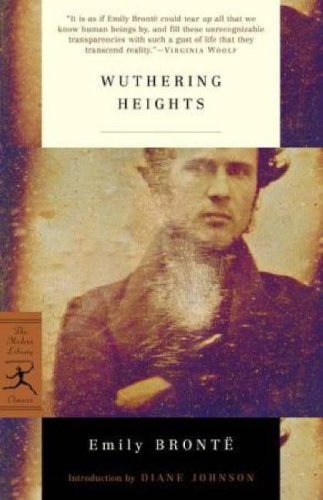
Wuthering Heights by Emily Brontë

15/06/2011


4
Wuthering Heights is a romance novel like no other.

As clichéd as it sounds, that’s the honest to God truth. I finished the book and didn’t know what to feel or how to respond. It was such an odd book and I’m still asking myself questions and processing what happened.

The characters are excellent, as any reader would probably tell you. Heathcliff is twisted, cruel and diabolical- but completely understandable. His motives are clear and he follows them through; even near the end when he… changes, he is still getting what he wants- just in an unplanned way. At least that’s how I interpreted it.

Yet, as I said at the start, it is obviously a romance novel and relationships begin early on in the narrative. In the introduction of my book, I was informed of such a thing and I could see it because I was looking for it. I think this reiterates how one should read prefaces and all the stuff some people skip at the start of the book. It’s there for a reason people. Romance is also portrayed in every which way you could think of: sincere, debased, passionate, considerate, contented and foremost as unwavering. Though the love (or lack thereof) is present throughout, the lovers all seem to remain adamant about their feelings. Yes there will be disagreements and the like, but the lovers will leave feeling the same about each other. It is when affection changes that the course of the novel changes and in this way, the book is utterly propelled by love.

Of course, I must mention the fact that most consider this book so fine. It is said to unabashedly show an outlook on human nature transcendent of her time. What would have repulsed many contemporaries is what fascinates the modern reader. The contrast between every character to another, of each place to another, demonstrates the finely wrought story of Brontë were everything has its own opposite counterpart.

I don’t think I truly appreciate the novel yet. The plot was superb (with a typical Victorian climax, I thought) and I said the characters were good. But they are surface story- nothing in depth or more personal. Admittedly I touched on some ideas, but they are only a general interpretation of a broad feeling; there is something below the surface that I just haven’t reached.

I know I’ll have to read it again.